Daily · Oct 19 to Oct 20Oct 20, 2026 · Daily Edition5 releases in the log · Anthropic first
All the frontier that ships
from
Both are frontier moves. Only one will show up in the IPO deck.
A bank vault door standing open at a Goodwill store in Santa Rosa, California, 2022. Missvain, CC BY 4.0.Lead Story
Anthropic sets aside 5% pre-IPO
Anthropic writes its IPO contract in reverse. OpenAI teaches GPT-6 to read COBOL.
Trading floor of the Standard Stock and Mining Exchange, Toronto, shown in two photographs. Public domain.
The structure is the message. Before the S-1, before the roadshow, Anthropic is saying the mission now has equity behind it.
Source anthropic.com/news · Date Oct 18, 2026 · Area Policy, News
By the Numbers: 5% of shares locked now.; +2% per 50% valuation increase.; ~$100B at $2T valuation.; Subject to shareholder approval..
The announcement is simple on paper. Anthropic will place 5% of its shares into a new Anthropic Public Benefit Fund, structured as a wholly owned LLC. The fund cannot lobby. It cannot make political donations. It can issue grants to nonprofits, make direct distributions to populations disrupted by AI, and fund research on the labor-market effects of AI deployment. An additional 2% accrues to the fund for every 50% increase in company value above an undisclosed baseline. Subject to shareholder approval.
But read the mechanism, not the announcement. Anthropic filed this in the same news cycle as its IPO preparation. This is not a charity initiative. It is a pre-commitment device. The company is trying to make a promise credible by making it costly to break. A 5% stake at a $2 trillion valuation is $100 billion. You cannot un-commit that by softening your annual report.
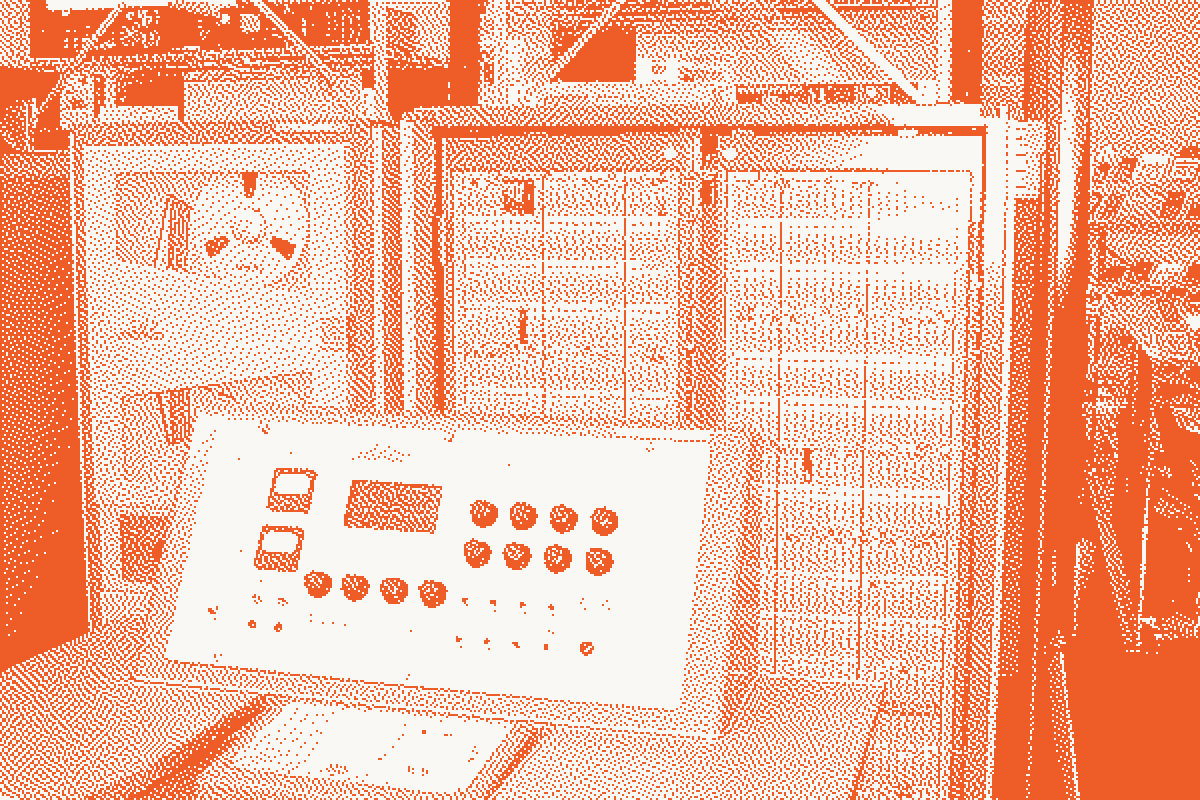
A mainframe computer on display at the Computer History Museum. Pargon, CC BY 2.0.
OpenAI teaches GPT-6 to read the ledger the internet forgot
COBOL runs approximately 800 billion lines of production code globally. It powers most of the financial transactions that actually happen, as opposed to the ones that get written about. It powers government benefit systems. It powers insurance claims. None of it has a GitHub repo.
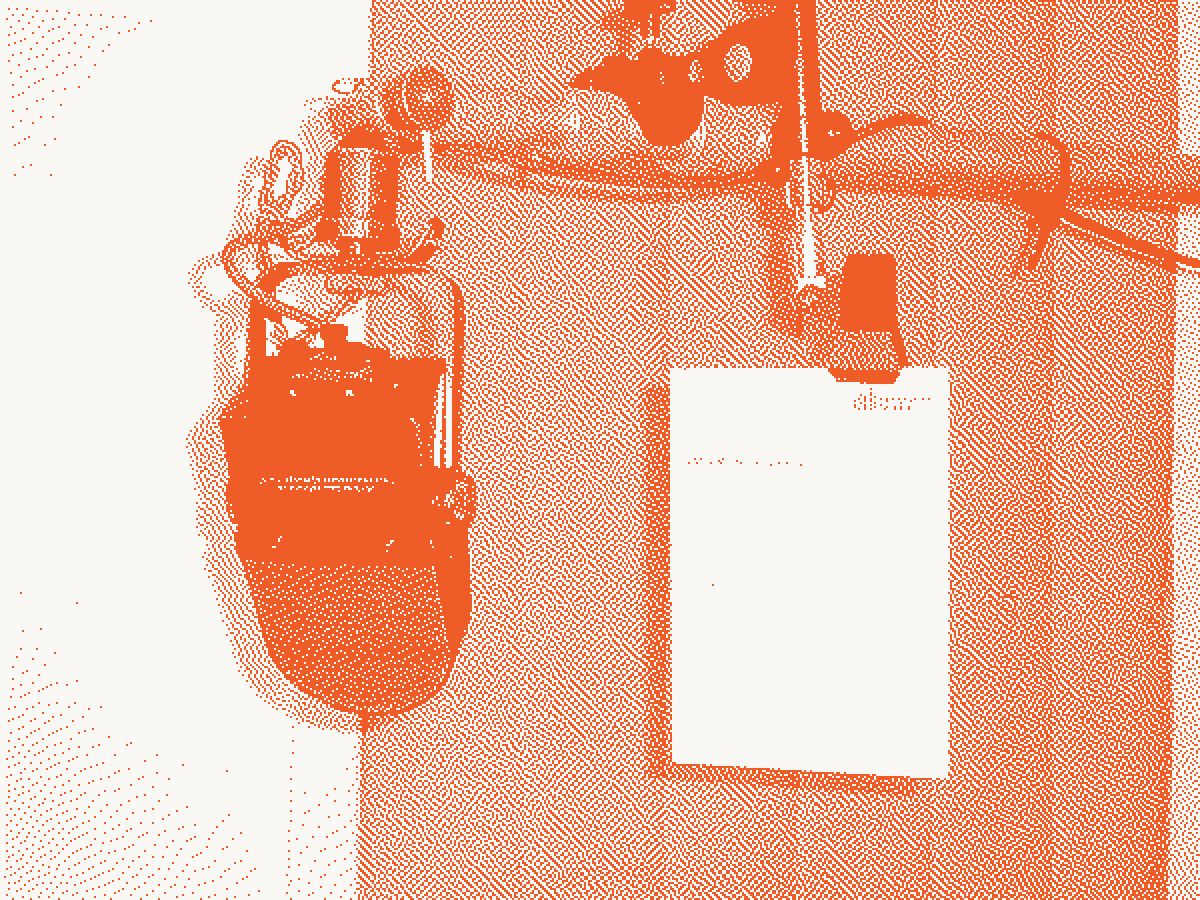
Absolute pressure gauge (manometer) from the Mir space station, a flight spare, serial number 19, built in 1988. Steve Jurvetson, CC BY 2.0.
Anthropic gives METR the keys, not just a summary
On October 15, quietly, Anthropic made an announcement that matters more than most of its product launches. Six employees of METR, the AI safety nonprofit, now hold company hardware, office space, and access to internal tools and systems comparable to those of Anthropic's own risk assessment teams. They can publish whatever they find.
An EMI RM-1B microphone from the 1930s in the collection of Abbey Road Studios. Josephenus P. Riley, CC BY 2.0.
xAI ships Grok Voice 3.0, quietly points at the leaderboard
On October 14, xAI released Grok Voice 3.0 into its Voice Agent API at $0.08 per minute, the same price as its predecessor. The model is speech-to-speech, bypassing the three-step chain of speech-to-text, LLM, and text-to-speech. The WebSocket endpoint is wss://api.x.ai/v1/realtime, and the API shape mirrors OpenAI's Realtime API, meaning existing integrations require minimal rework.
There is a version of the Anthropic IPO story. Then there is the version that actually matters.
The version that matters: in the 48 hours before a public offering analysts are pricing above $2 trillion, Anthropic announced it is locking away 5% of its shares in a fund it cannot spend on lobbying, cannot sell at will, and cannot unilaterally deploy. It committed this before the market had a say. Before the underwriters had a say. Before the board knew what $2 trillion of public scrutiny would demand.
Every tech company eventually hits the moment when the mission statement collides with the stock price. Anthropic is trying to settle that collision in advance.
Meanwhile, 2,500 miles away in San Francisco's other half, OpenAI published something considerably more grounded: COBOL. GPT-6, measured against migration benchmarks for legacy enterprise code, reached 97.9% accuracy at high reasoning effort. Banks, governments, and insurance companies are running software that predates the internet. This is the frontier acting like it knows what infrastructure actually is.
Two very different bets. Same 24-hour window.
The Lead Story 01
Report by Eddie Belaval
Anthropic sets aside 5% pre-IPO.
Trading floor of the Standard Stock and Mining Exchange, Toronto, shown in two photographs. Public domain.
The structure is the message. Before the S-1, before the roadshow, Anthropic is saying the mission now has equity behind it.
Source anthropic.com/news · Date Oct 18, 2026 · Area Policy, News
By the Numbers: 5% of shares locked now.; +2% per 50% valuation increase.; ~$100B at $2T valuation.; Subject to shareholder approval..
The announcement is simple on paper. Anthropic will place 5% of its shares into a new Anthropic Public Benefit Fund, structured as a wholly owned LLC. The fund cannot lobby. It cannot make political donations. It can issue grants to nonprofits, make direct distributions to populations disrupted by AI, and fund research on the labor-market effects of AI deployment. An additional 2% accrues to the fund for every 50% increase in company value above an undisclosed baseline. Subject to shareholder approval.
But read the mechanism, not the announcement. Anthropic filed this in the same news cycle as its IPO preparation. This is not a charity initiative. It is a pre-commitment device. The company is trying to make a promise credible by making it costly to break. A 5% stake at a $2 trillion valuation is $100 billion. You cannot un-commit that by softening your annual report.
The blast radius here is mostly institutional rather than immediate. No builder wakes up today to find an API changed. But anyone watching the competitive dynamics of the frontier understands what this move is preempting: the question every AI safety lab eventually faces when it starts trading at technology-sector multiples. What happens to the mission when the LPs need a return?
Anthropic's answer, for now, is a structural one. The fund represents a small but real claim on the company's future value that is explicitly ring-fenced from profit maximization. Whether the governance holds when the pressure is real is not answerable today. The commitment is answerable. And the commitment is documented, filed, and public.
The pattern across the last week is striking. October 15 brought the METR evaluator access. October 14 brought the Singapore office and the midterms safeguards update. October 18 brought the fund. Every announcement is about the same underlying question: do the safety commitments made in a private company survive the transition to a public one? Anthropic is answering that question structurally rather than rhetorically.
Compare this to OpenAI's own 2026 arc. OpenAI spent most of this year in legal and regulatory fights over its conversion from nonprofit to for-profit status. The Delaware injunction lifted in August. The capped-profit structure unwound. The transition is proceeding. But the reputational cost of that process has been real, and the narrative has been one of commitments eroded under investor pressure. Anthropic is choosing the opposite posture: lock the commitments in first, then go public.
The read: this is a company that has decided its path to a defensible valuation runs through institutional trust rather than maximum financialization. Whether public markets will agree is the question the IPO will answer. Pre-IPO, the signal is clear. Anthropic is betting that safety credibility is an asset, not a liability.
Builder's move: nothing operational today. But if you are building on Claude APIs and have investors asking about Anthropic's post-IPO stability, this announcement is the talking point. The fund makes the mission materially harder to abandon under shareholder pressure.
✦ ✦ ✦
Shipped. · Also shipped
Also shipped
A mainframe computer on display at the Computer History Museum. Pargon, CC BY 2.0.
OpenAI teaches GPT-6 to read the ledger the internet forgot.
COBOL runs approximately 800 billion lines of production code globally. It powers most of the financial transactions that actually happen, as opposed to the ones that get written about. It powers government benefit systems. It powers insurance claims. None of it has a GitHub repo.
On October 19, OpenAI published work showing that GPT-6 Astra reached 87.4% average pass rate on MultiLangBench, a new evaluation covering 20 low-resource programming languages. On the COBOL migration benchmark specifically, GPT-6.1 Sol reached 97.9% accuracy at high reasoning effort, up from an estimated 26.8% for GPT-5.6 Sol. The benchmark requires translated programs to pass every hidden test, matching observable outputs with the original. OpenAI also reported a 39% reduction in API costs at the same reasoning setting.
The blast radius is concentrated in financial services, government IT, and insurance. Firms running five-year COBOL modernization projects at several hundred thousand dollars per programmer-month now have a credible evaluation showing machine-speed migration is within range. This does not eliminate human oversight of financial systems. It changes the cost math considerably.
Contrast against the Anthropic story in this window: while Anthropic was announcing its governance structure, OpenAI was shipping enterprise utility. These are different theories about what the frontier moment actually is. Anthropic thinks the moment is about institutional trust. OpenAI thinks it is about capability on the problems that organizations actually have. Both theories may be correct simultaneously. They produce different roadmaps, different partnership pitches, and different moats.
Absolute pressure gauge (manometer) from the Mir space station, a flight spare, serial number 19, built in 1988. Steve Jurvetson, CC BY 2.0.
Anthropic gives METR the keys, not just a summary.
On October 15, quietly, Anthropic made an announcement that matters more than most of its product launches. Six employees of METR, the AI safety nonprofit, now hold company hardware, office space, and access to internal tools and systems comparable to those of Anthropic's own risk assessment teams. They can publish whatever they find. Anthropic cannot veto publication, only request limited redactions for predefined categories: customer data, confidential IP, narrow model architecture details.
This is tier-three access in Anthropic's three-tier evaluator framework. Tier one is narrow investigations with Anthropic controlling access and approving publication. Tier two is broader information and publication without approval. Tier three is what METR just received.
The mechanism matters. Anthropic has not just committed to evaluation. It has committed to a structure where a third party can embarrass it publicly. METR can document an incident and publish it without asking permission. That is different from a lab commissioning a safety report and reviewing the draft.
Contrast: no other frontier lab has implemented a comparable third-tier evaluation structure with pre-committed publication rights at this level of specificity. OpenAI has its Safety Board, with its own recent history. Google DeepMind's evaluations are largely internal. Meta publishes model weights and argues that artifact-level transparency is the equivalent form of openness. These are genuinely different philosophies about what independent oversight means, and the difference will matter in the regulatory environment that the IPO cycle is entering.
An EMI RM-1B microphone from the 1930s in the collection of Abbey Road Studios. Josephenus P. Riley, CC BY 2.0.
xAI ships Grok Voice 3.0, quietly points at the leaderboard.
On October 14, xAI released Grok Voice 3.0 into its Voice Agent API at $0.08 per minute, the same price as its predecessor. The model is speech-to-speech, bypassing the three-step chain of speech-to-text, LLM, and text-to-speech. The WebSocket endpoint is wss://api.x.ai/v1/realtime, and the API shape mirrors OpenAI's Realtime API, meaning existing integrations require minimal rework. grok-voice-latest now aliases to Grok Voice 3.0. Anyone not pinning a specific version received a silent upgrade.
xAI claims an Artificial Analysis Speech-to-Speech Index score of 86.9. Artificial Analysis's own leaderboard puts Grok Voice 3.0 second, behind GPT-Live-1. xAI's homepage says first. The gap between a self-reported benchmark and an independently run one is smaller than it used to be. It is still a gap.
Builder's move: if you are on grok-voice-latest and have not tested behavior since October 14, test now. Silent alias upgrades at $0.08 per minute are cheap to catch in staging and expensive to discover via customer complaints.
On October 15, Mistral released Timestral, its first family of time-series foundation models. Four sizes, the largest at 209M parameters. The 5M checkpoint runs on standard CPUs. All weights are on Hugging Face under a modified MIT license; inference code is Apache 2.0. The architecture is a patch-based transformer with time and variate attention, a 32,768-step context window, and 21 output quantiles for probabilistic forecasting. It supports both past-only and known-future covariates. Mistral claims top-three placement on GIFT-Eval, TIME, and fev-bench.
Mistral's strategic signal is clearer than the benchmark numbers. This is a lab that built its reputation on language models, then code models. Adding time series is a move into the part of enterprise ML that most companies actually use. Most organizations have more structured time-series data than unstructured text. A family of models that runs on a laptop CPU, at open weights, is a different pitch than API-only forecasting services.
Anthropic's IPO S-1 has not been filed as of this edition. The public benefit fund announcement described governance details as preliminary, with fund structure and baseline valuation still to be disclosed. Several analysts are modeling a late-November listing window.
Google DeepMind was quiet in this specific 24-hour window. Gemini 4 Argon landed October 13. No confirmed release in the Oct 19 to Oct 20 frame.
Meta's Muse Wonder Full remains exclusive to Muse Code subscribers with no update on general availability in this window.
OpenAI's Codex 2 has circulated in enterprise channels on the November roadshow rumor circuit, but nothing is confirmed.
The Close
Anthropic wrote the public benefit into the cap table before the bankers arrived.
OpenAI translated a COBOL payroll ledger nobody could read into Python anyone can maintain.
Both are frontier moves. Only one will show up in the IPO deck.
✦
Stay on the frontier
Get Shipped. in your inbox.
Daily digest at 9 PM ET. Weekly magazine every Friday morning. Six labs, one feed. No spam, one-click unsubscribe.
New every night at 9 PM ET
Back of Book · p.21 →
The Release Log
A 1:1 mirror of every Anthropic release in the window. Use it as reference. Share it with your team.
A
News and Policy
2 Models in window
Pre-IPO structural announcements and safety governance from Anthropic. No model changes in this window.
Anthropic will place 5% of its shares into a new Anthropic Public Benefit Fund structured as a wholly owned LLC. The fund can issue grants, make direct distributions, and fund labor-market research. It cannot lobby or make political donations. An additional 2% of shares accrues to the fund for every 50% increase in company value above an undisclosed baseline. Subject to shareholder approval. At an analyst-projected $2 trillion IPO valuation, the initial 5% commitment represents approximately $100 billion.
Why it mattersPre-commitment devices are rare in tech IPOs. This one makes the safety mission materially costly to reverse post-listing, and it was filed in the same news cycle as IPO preparation.
Six METR employees now hold tier-three access: company hardware, office space, internal tooling, and publication rights without prior Anthropic approval. Redactions are limited to customer data, privileged legal information, and narrow model architecture categories. SecureBio and Accenture are also part of the evaluator program. Talks with Hugging Face are ongoing.
Why it mattersNo other frontier lab has publicly implemented a third-tier independent evaluation structure with pre-committed publication rights at this specificity.
B
Other Labs
3 Release notes
Third-party lab releases in the Oct 19 to Oct 20 window. OpenAI, xAI, Mistral.
GPT-6 Astra reached 87.4% average pass rate on MultiLangBench across 20 low-resource languages including COBOL, Fortran, and Visual Basic. GPT-6.1 Sol reached 97.9% COBOL migration accuracy at high reasoning effort, up from approximately 26.8% for GPT-5.6 Sol. Benchmark requires translated programs to pass hidden tests matching original observable outputs. OpenAI also reported a 39% reduction in API costs at high reasoning effort on the migration task.
Why it mattersThe COBOL modernization market is large, slow, and expensive. Near-engineering accuracy at reduced API cost changes the economic case for machine-assisted migration in financial services and government IT.
Four model sizes from 5M to 209M parameters. Patch-based transformer with time and variate attention, 32,768-step context, 21 output quantiles. Designed to run on standard CPUs. Weights on Hugging Face under modified MIT license; inference code under Apache 2.0. Claims top-three ranking on GIFT-Eval, TIME, and fev-bench.
How to useLoad from Hugging Face at mistralai/Timestral-5M through mistralai/Timestral-209M. Inference code on GitHub at mistralai/timestral.
Speech-to-speech model replacing Grok Voice 2.0. grok-voice-latest alias now points to 3.0. WebSocket endpoint: wss://api.x.ai/v1/realtime. Mirrors OpenAI Realtime API interface. Priced at $0.08 per minute. xAI claims 86.9 on the Artificial Analysis Speech-to-Speech Index; Artificial Analysis's own run places it second, behind GPT-Live-1.
How to usePin grok-voice-3.0 in production before deploying. Test any grok-voice-latest integrations for behavior changes before pushing to customers.