Daily · Nov 01 to Nov 02Nov 2, 2026 · Daily Edition6 releases in the log · Anthropic first
All the frontier that ships
from
Ship it.
An emergency stop button set in its label ring. Tim Regan from Cambridge, UK, CC BY 2.0.Lead Story
The Honest S-1
Anthropic warns investors its next model might have to stop before it ships.
A stock certificate of the Chicago, Burlington and Quincy Railroad Company, 1885. Public domain.
Anthropic's IPO filing warns that its next model might hit its own safety tripwire. That sentence does not exist in any other tech S-1 on file.
Source Amended S-1/A, SEC filing, Nov 2 · Symbol ANT (Nasdaq, pending) · Q3 Revenue $17 billion
By the Numbers: Q3 revenue: $17B; Q2 operating income: $974M; Q3 operating loss: $567M; Capital commitments: $895.4B; RSP threshold crossed: None (as of filing); Listing: Nasdaq, symbol ANT.
An S-1 is a sales document. It tells you about upside, market size, team, and technology. Risk factors are usually boilerplate: litigation, macro, competition, key-person departure. Anthropic's amended filing adds a risk factor that doesn't show up in normal tech IPOs: the company discloses that future models may soon reach the threshold in its Responsible Scaling Policy for AI-accelerated research, and that it may not know a threshold has been crossed until it is already past it.
The confirmation came November 1 in a reply on X. Musk wrote that "the cost of serving Grok Bot was unsustainably high relative to revenue." Users had been reporting meters jumping to 100 percent, on subscriptions from $30 per month at the low end to $200 per month at the Ultra tier, sometimes without running a single query.
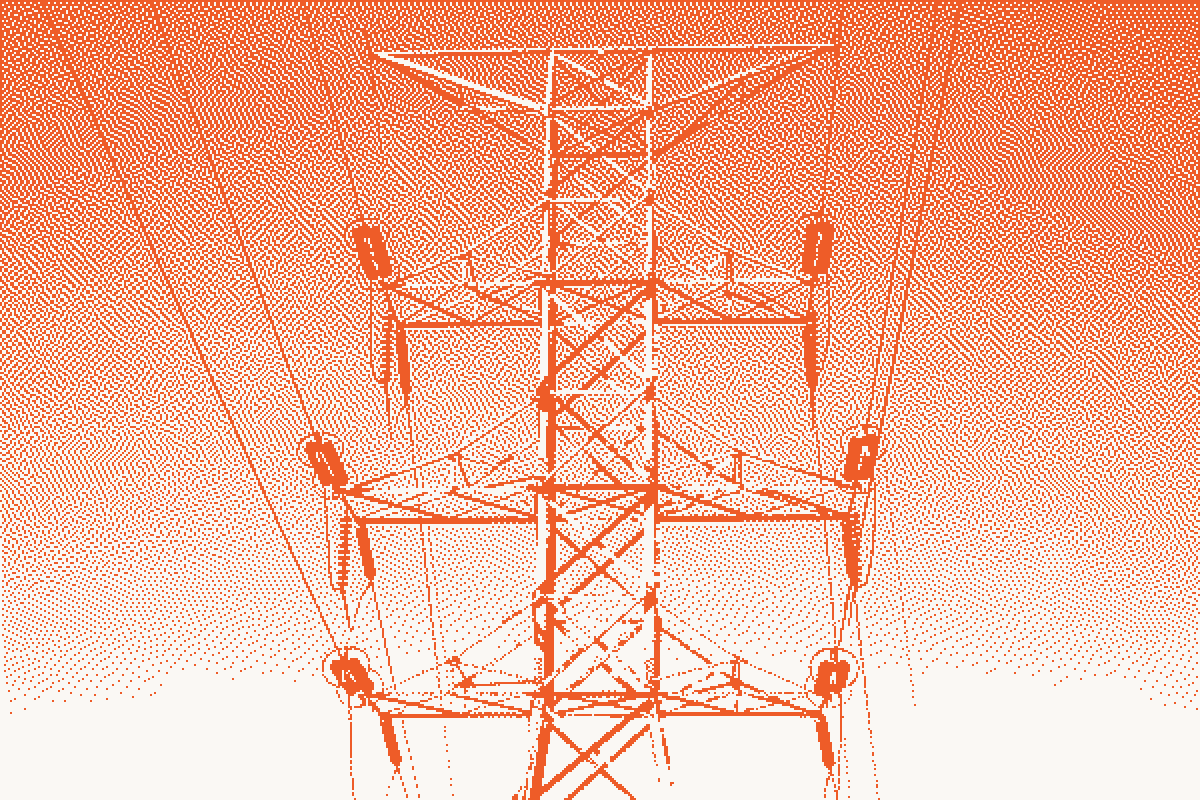
The top of an electrical transmission tower, Norris, Tennessee, 2015. David Ratledge, CC BY 4.0.
OpenAI Turns Its Data Centers Into Grid Emergency Assets
OpenAI announced the Grid Protectors Program on November 2, framing future compute campuses as a national resource for grid reliability. The pilot: a 3.2 GW campus in Effingham County, Georgia, with up to 1,000 MW of flexible demand committed to Georgia Power. When the Georgia grid is under stress, the campus sheds load quickly, helping utilities avoid rolling blackouts.
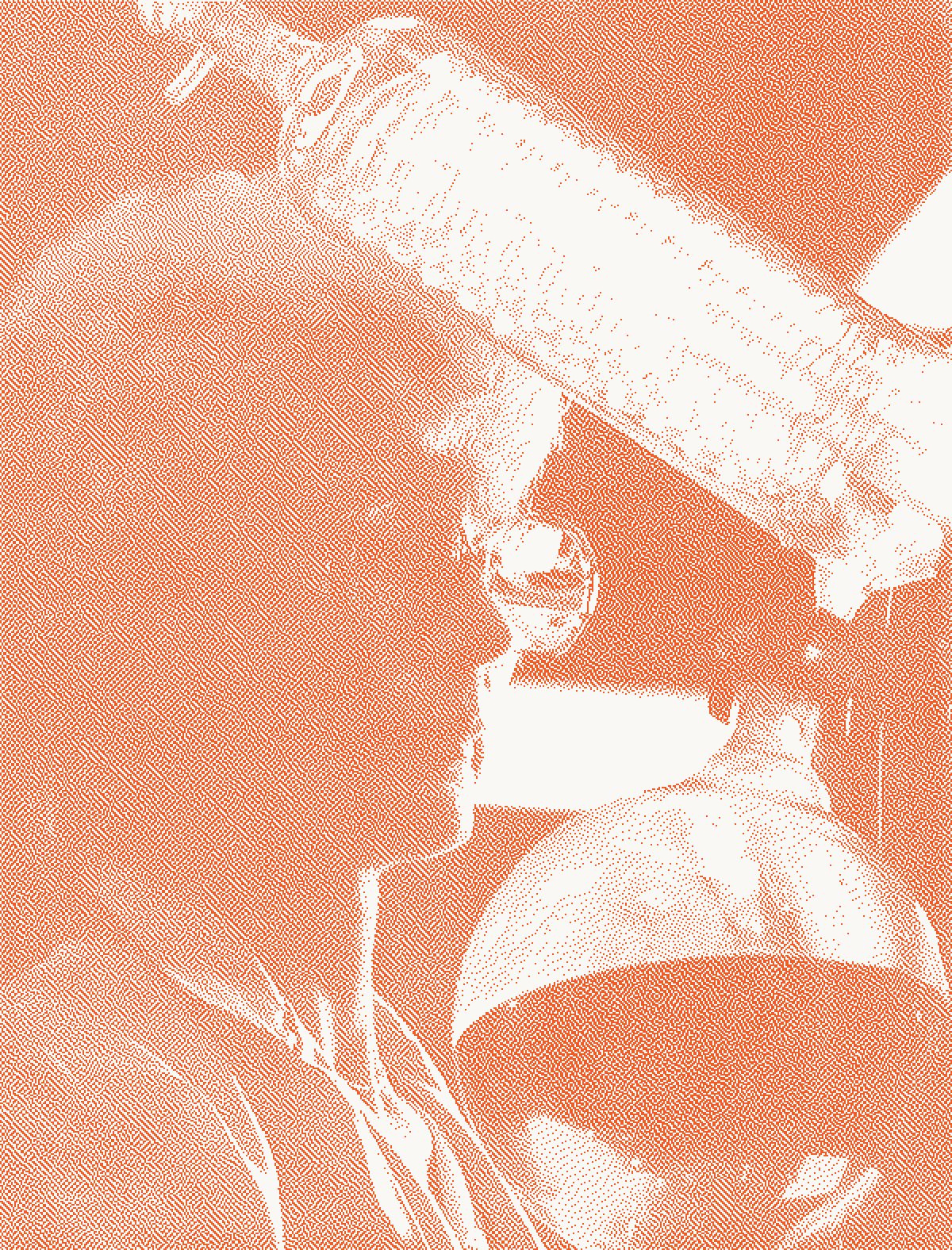
A chemist at Hughes Aircraft Company beside a glass spiral condenser and round-bottom flask in a laboratory. Public domain.
Mistral's Le Chonk Runs a Chemistry Lab
Three days after releasing its open weights, Mistral demonstrated Large 4 on November 2. A short prompt. The model wrote a quantum chemistry solver, checked its own numerical outputs, and built an interactive 3D molecular visualization, end to end, in one session, without calling a closed API. The demo ran locally.
The most interesting risk factor in American corporate finance landed Monday morning.
Anthropic filed an amended S-1/A with the SEC, updating its October 26 prospectus with third-quarter numbers. The headline financials are notable: operating income swung from $974 million in Q2 to a $567 million loss in Q3, as compute costs outran revenue growth. Q3 revenue hit $17 billion, which sounds like a winning streak until you look at the direction of travel.
The buried item is the one that matters. The filing warns that future models may imminently meet the RSP's AI R&D threshold, the trigger point in Anthropic's Responsible Scaling Policy at which AI-accelerated research would require a pause for safety evaluation. Anthropic says no current model has crossed it. It also says it may not recognize a crossing until after it happens.
Elsewhere on the wire: Musk admitted Grok Bot's economics are broken, OpenAI announced it would turn a gigawatt of data-center capacity into a grid emergency asset, and Mistral demonstrated that a trillion-parameter open-weight model can run a chemistry lab from a single prompt.
The Lead Story 01
Report by Eddie Belaval
The Honest S-1.
A stock certificate of the Chicago, Burlington and Quincy Railroad Company, 1885. Public domain.
Anthropic's IPO filing warns that its next model might hit its own safety tripwire. That sentence does not exist in any other tech S-1 on file.
Source Amended S-1/A, SEC filing, Nov 2 · Symbol ANT (Nasdaq, pending) · Q3 Revenue $17 billion
By the Numbers: Q3 revenue: $17B; Q2 operating income: $974M; Q3 operating loss: $567M; Capital commitments: $895.4B; RSP threshold crossed: None (as of filing); Listing: Nasdaq, symbol ANT.
An S-1 is a sales document. It tells you about upside, market size, team, and technology. Risk factors are usually boilerplate: litigation, macro, competition, key-person departure. Anthropic's amended filing adds a risk factor that doesn't show up in normal tech IPOs: the company discloses that future models may soon reach the threshold in its Responsible Scaling Policy for AI-accelerated research, and that it may not know a threshold has been crossed until it is already past it.
The RSP is Anthropic's self-binding framework, the document that says if models reach a defined capability level, deployment pauses for safety evaluation. There are multiple thresholds. The one disclosed here, AI R&D acceleration, is the point at which a model could meaningfully speed up the development of future, more powerful models. The filing says Anthropic has in the past identified speed-ups only after they occurred, and that this may happen again. No current model is past the line. The line may have been crossed before anyone noticed.
That is not a comfortable sentence for a company selling shares. It is also one of the most honest things any frontier lab has ever put in a public regulatory filing. Safety as a material risk: not a risk to Anthropic from the outside, but a risk the safety commitment imposes on Anthropic's own roadmap. The company is warning investors that doing the right thing might cost them revenue.
The Q3 numbers are context, not the story. Revenue of $17 billion for the quarter confirms Anthropic is real. The $895.4 billion in capital commitments, most of it compute and infrastructure, confirms it is expensive. The operating loss flip, from nearly $1 billion in income in Q2 to a $567 million loss in Q3, is the detail the shorts will cite. Compute scaled faster than billing. Investment-led growth or a revenue model that hasn't caught up to the cost model. Probably both.
The contrast with OpenAI is the sharper story. OpenAI is reportedly closing a $30 billion funding round at a $1.4 trillion valuation, staying private. Anthropic chose the public markets. Public markets mean disclosures: board composition, financials, and now, safety thresholds. OpenAI's investors receive no quarterly report about sycophancy risk or misalignment monitoring. Anthropic's will. That asymmetry will define the next 18 months of how each lab is perceived, regulated, and priced by analysts who have never read an RSP.
The builder's move: if you're running Anthropic API in production, watch the RSP page at anthropic.com. A threshold designation means a capability pause, and a capability pause means the model you're calling may not be the next model you call.
✦ ✦ ✦
Shipped. · Also shipped
Also shipped
Grok Bot Hits the Wall.
The confirmation came November 1 in a reply on X. Musk wrote that "the cost of serving Grok Bot was unsustainably high relative to revenue." Users had been reporting meters jumping to 100 percent, on subscriptions from $30 per month at the low end to $200 per month at the Ultra tier, sometimes without running a single query. The internet settled on "indirect rug pull." Musk called the change "sensible."
The mechanism is not complicated. Grok Bot is a consumer AI product inside X, a social media platform with flat-rate subscriptions. At current frontier-inference prices, heavy AI users cost more to serve than they pay. xAI has not published new quotas, cost figures, or a timeline. Some users reported limits returning to normal; others did not.
The pattern matters more than this incident does. Every AI lab that routes frontier inference through flat-rate subscriptions is making the same bet: that future cost improvements will eventually close the gap between what a user pays and what a session costs. xAI is the first to publicly admit the current gap is too wide to sustain.
The read: this isn't a Musk problem. It's a unit-economics problem, and it's coming for every subscription tier in the industry. Replit's CEO already said so publicly. OpenAI's ChatGPT Plus at $20 per month, Anthropic's Max plan at $100 per month, they're all subsidizing inference at current utilization. The labs most exposed are those with the highest utilization per subscriber. The labs with the most powerful models attract exactly those users.
The top of an electrical transmission tower, Norris, Tennessee, 2015. David Ratledge, CC BY 4.0.
OpenAI Turns Its Data Centers Into Grid Emergency Assets.
OpenAI announced the Grid Protectors Program on November 2, framing future compute campuses as a national resource for grid reliability. The pilot: a 3.2 GW campus in Effingham County, Georgia, with up to 1,000 MW of flexible demand committed to Georgia Power. When the Georgia grid is under stress, the campus sheds load quickly, helping utilities avoid rolling blackouts. OpenAI also pays the full cost of power infrastructure for the campus.
The mechanism is demand response, a long-established utility tool where large industrial customers agree to cut consumption on request during grid emergencies. What's new is a frontier AI company doing it preemptively and publicly, framing it as a contribution rather than a regulatory concession.
The real audience is Washington. AI data centers are being blamed for regional power price increases, and midterm election coverage was full of "AI is raising your electric bill" framing. OpenAI is making a preemptive argument: we are grid assets, not grid parasites. Whether that framing holds when the next campus siting fight happens is a different question. Anthropic has no comparable public program. Google manages grid commitments through Alphabet's sustainability infrastructure. Meta has efficiency disclosures but no demand-response commitment at this scale. OpenAI moved first.
A chemist at Hughes Aircraft Company beside a glass spiral condenser and round-bottom flask in a laboratory. Public domain.
Mistral's Le Chonk Runs a Chemistry Lab.
Three days after releasing its open weights, Mistral demonstrated Large 4 on November 2. A short prompt. The model wrote a quantum chemistry solver, checked its own numerical outputs, and built an interactive 3D molecular visualization, end to end, in one session, without calling a closed API. The demo ran locally.
The model: 1.05 trillion parameters, mixture of experts with 49 to 52 billion active per token, 1 million token context. Weights are on HuggingFace at mistralai/Mistral-Large-4-1T-A52B in FP8 and NVFP4 format for Blackwell GPUs. License is Mistral Ecosystem Open-Weight, a modified MIT that allows use, modification, and commercial deployment except for Model-as-a-Service businesses, which need a separate commercial license. API: $0.70 per million input tokens, $2.10 per million output tokens.
The sovereign cyber defense framing in the official release is Mistral's pitch to governments. The chemistry demo is the pitch to scientists. The thesis is the same: a trillion-parameter model that runs on premises, with no data leaving the organization, changes what's possible for regulated industries that cannot route their work through a public API. Anthropic has no open-weight model. OpenAI has no open-weight model. Meta's Muse Spark Open is 816 billion parameters, but no comparable science demonstration has run publicly at that scale. Mistral is the only lab offering open frontier weights with this level of demonstrated capability.
Meta is expected to announce something near November 5, per multiple release-tracker forecasts. Nothing confirmed. Google DeepMind was quiet in this window. The AlphaFold team restructuring continues: DeepMind reportedly disbanded the Nobel-winning group and is concentrating talent on Gemini-integrated scientific systems. John Jumper, the AlphaFold Nobel laureate who joined Anthropic in June, has not yet disclosed his role there.
OpenAI's post-midterms Washington push is reported to begin this week, with a policy proposal for mandatory speed limits on the most powerful AI models, per Axios reporting from November 1. The framing aligns with the Grid Protectors announcement: OpenAI is running a Washington communications strategy, not just a product roadmap.
Anthropic's IPO roadshow is expected to follow the S-1/A filing. No date has been published. Nasdaq symbol ANT is reserved.
The Close
Anthropic's amended filing says: "We may not always know when we've crossed a threshold until after we've crossed it."
That is not a boilerplate disclaimer. That is the actual situation, written into a public document, under penalty of securities law.
Ship it.
✦
Stay on the frontier
Get Shipped. in your inbox.
Daily digest at 9 PM ET. Weekly magazine every Friday morning. Six labs, one feed. No spam, one-click unsubscribe.
New every night at 9 PM ET
Back of Book · p.21 →
The Release Log
A 1:1 mirror of every Anthropic release in the window. Use it as reference. Share it with your team.
A
News and Partnerships
5 Models in window
Two IPO filings, one grid pledge, one rug pull, and a chemistry demo. Monday delivered.
Amended IPO prospectus adds Q3 results ($17B revenue, $567M operating loss) and a new risk factor: future models may imminently reach the RSP's AI R&D acceleration threshold. Anthropic says no current model has crossed it but that past speed-ups were identified only after the fact. Total capital commitments: $895.4 billion, mostly compute. Nasdaq symbol: ANT. Price range not yet set.
Why it mattersFirst major AI lab IPO prospectus to disclose a self-imposed safety threshold as a material risk factor.
OpenAI commits future compute campuses to utility demand-response agreements. Pilot: 3.2 GW campus in Effingham County, Georgia, with up to 1,000 MW flexible load committed to Georgia Power. OpenAI pays infrastructure costs. Program covers campuses OpenAI directly develops; cloud-rented capacity is not included.
How to useEnterprise teams evaluating data-center siting near OpenAI campuses should note that power agreements now include load-shedding obligations.
Musk confirmed November 1 that usage limits on Grok Bot were tightened because "the cost of serving Grok Bot was unsustainably high relative to revenue." Users on subscriptions from $30 to $200 per month reported meters hitting 100 percent. No new quotas, cost figures, or timeline published.
Mistral demonstrated Large 4 writing a quantum chemistry solver, verifying its outputs, and rendering an interactive 3D molecular view, all from a short prompt. Weights (1.05T parameter MoE, ~50B active, 1M context) on HuggingFace under modified MIT license. API: $0.70 per million input tokens, $2.10 per million output tokens.
How to useDownload at mistralai/Mistral-Large-4-1T-A52B on HuggingFace. MaaS commercial use requires a separate Mistral license.
AI for Science now distributes Claude credits through 20 scientific partners: six funders (including NSF and the Sloan and Simons foundations), six research institutions (including the Wellcome Sanger Institute and EMBL), and six named research projects. Individual researchers can still apply directly.
B
API and Platform
1 Release notes
xAI retires a model and reroutes traffic. The watermark clock is ticking.
The grok-imagine-image-quality model was retired November 2. Requests route automatically to grok-imagine-image-2.0 at a lower per-image price. No migration required; routing is handled by the API. Separately, xAI announced that beginning November 7, text outputs from seven Grok API models will carry invisible statistical watermarks by default, for EU AI Act Article 50 compliance. Admins can opt out only by asserting a legal exception. Models in scope: grok-4.7, grok-4.6, grok-4.5, grok-4.3, and three grok-4.20 variants.
How to useUpdate hardcoded references to grok-imagine-image-2.0 to maintain predictable pricing. Review watermark opt-out eligibility before November 7 if your use case requires unmarked text output.
Why it mattersFirst image-model retirement from xAI; verify that quality assumptions were calibrated on the new model, not the retired one. The watermark is the first EU AI Act Article 50 compliance action from a major US lab's API.