Daily · Nov 02 to Nov 03Nov 3, 2026 · Daily Edition11 releases in the log · Anthropic first
All the frontier that ships
from
The numbers are public now. The reckoning takes longer.
Lead Story
The $895 Billion Bet
Anthropic files nine-month revenue of $33.2 billion and $895 billion in compute commitments, while a DeepMind lifetime NDA story and a throttled Grok Bot show the frontier is expensive in every dimension.
Anthropic's amended IPO prospectus is the most transparent window the company has ever opened on itself. The revenue numbers are large. The commitment number is a different animal entirely.
Source: SEC Form S-1/A, Anthropic PBC, filed Nov 02, 2026 ● · Ticker: ANT (Nasdaq Global Select Market)
By the Numbers: $33.2B nine-month revenue; 1,200% year-over-year growth; $895.4B compute commitments; ~$17B Q3 revenue; ~46% Q2 to Q3 growth.
The figure that stops you is not the revenue. $33.2 billion across the first nine months of 2026 is a staggering growth rate, up 1,200% from the same period in 2025, but revenue velocity at this stage is expected to look like that. You look at the growth number, you nod, and you move on. What stops you is the $895.4 billion in compute purchase commitments and lease obligations.
$895 billion. Nearly a trillion dollars, pre-committed to computing infrastructure. For comparison, that is more than the combined GDP of Poland and Belgium. Anthropic is not buying chips for next quarter. It is buying the right to remain on the frontier for the better part of a decade, against OpenAI, Google DeepMind, and Meta AI, all of whom are committing comparable sums to the same build.
Three padlocks: a three-digit combination lock, a two-key lock and a four-digit combination lock. Mx. Granger, CC0.
DeepMind's Lifetime Clause
Google says it has updated non-disparagement terms for new hires. What it has not done is release existing employees from clauses that, according to multiple current and former staff, bar them from criticizing the company for the duration of their lives.
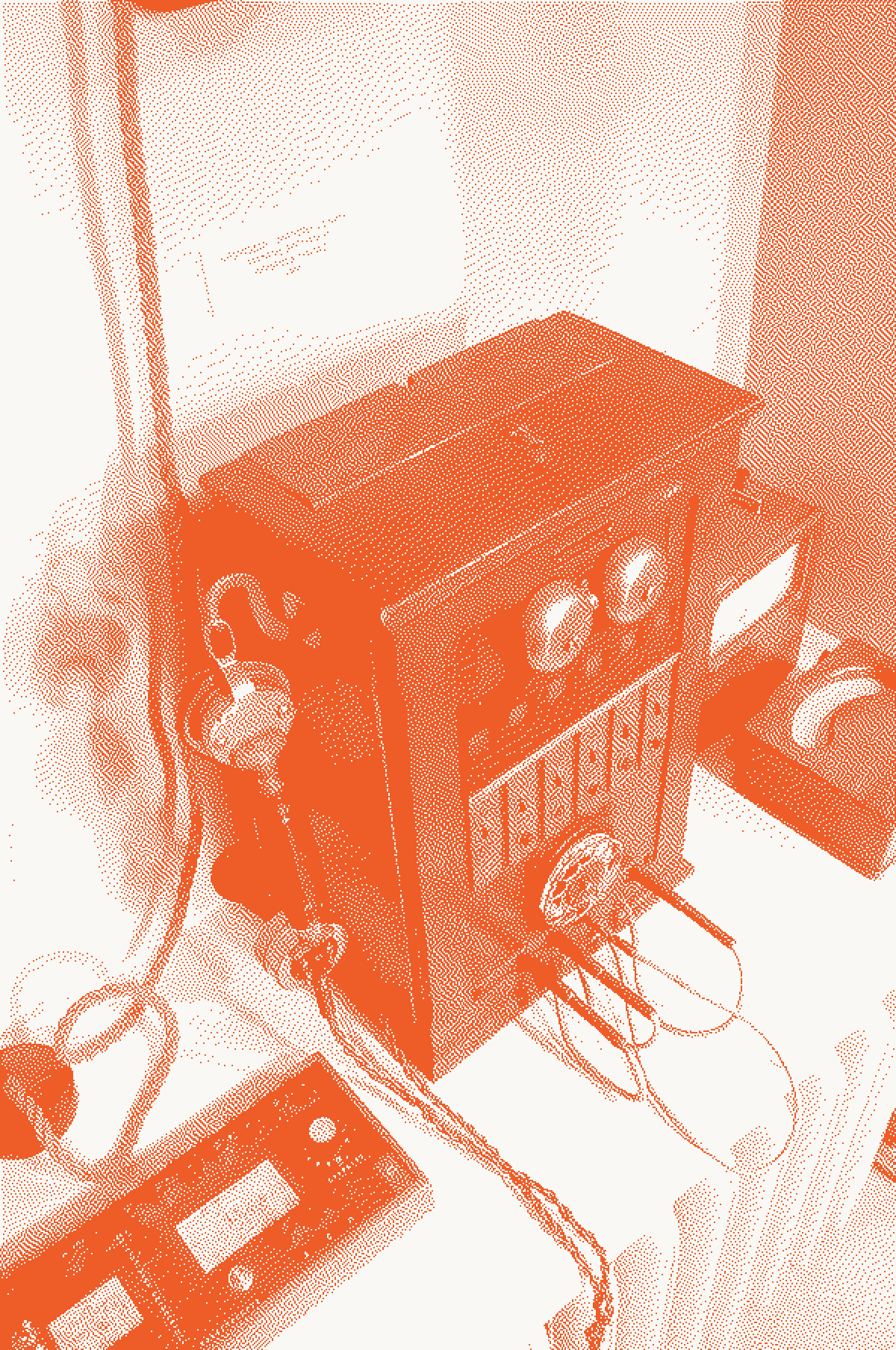
A Siemens & Halske telephone switchboard on display at the Elisa Telephone Museum, Helsinki. Antti Leppänen, CC BY 4.0.
Message Threads Go Live on the Claude API
Anthropic put message threads into public beta on November 2. Instead of re-sending the full conversation history on every API call, you create a thread on the first request and pass only new messages on subsequent turns. The server holds the conversation state between requests.
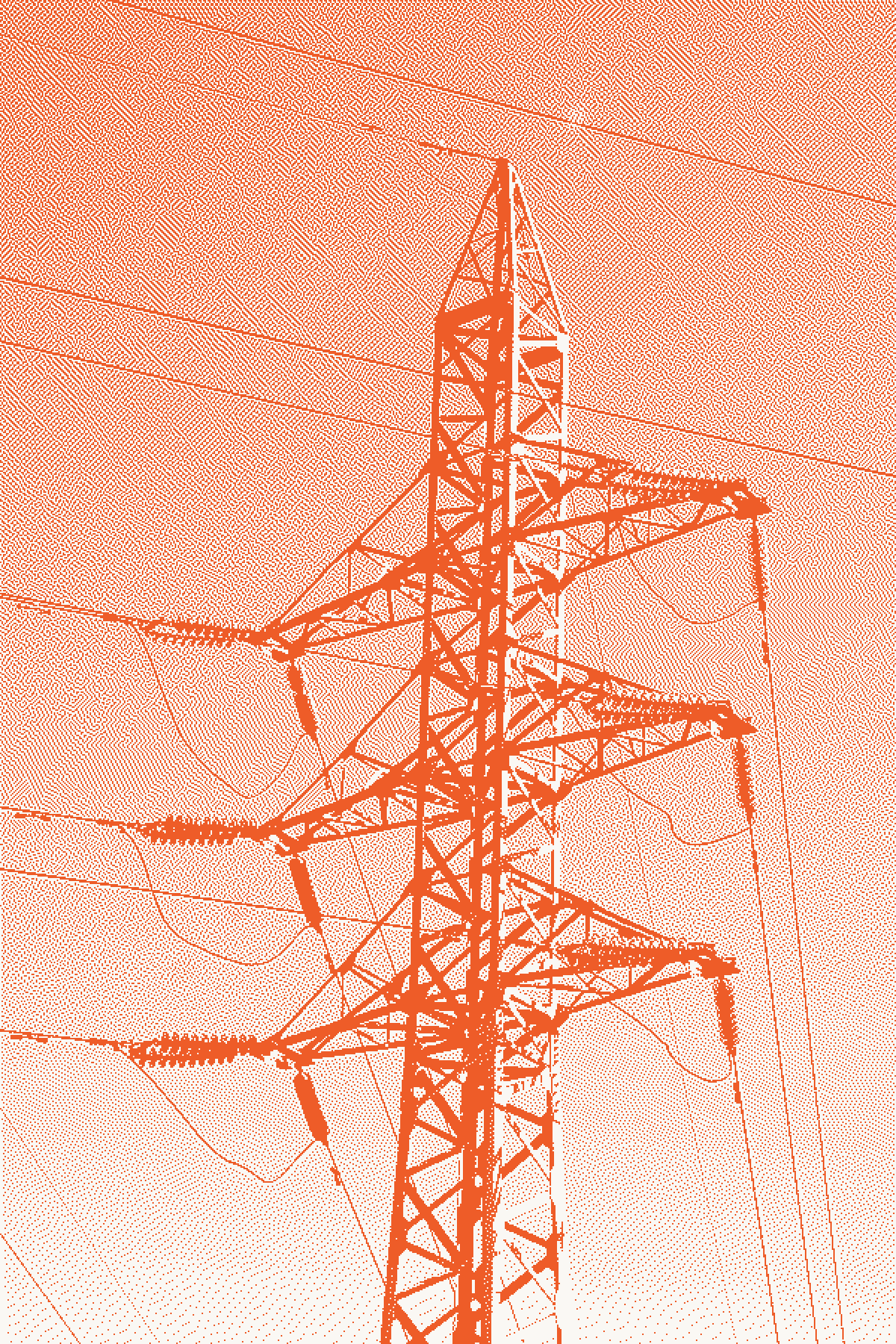
An electric transmission power tower carrying overhead lines. Foto3821, CC0.
OpenAI Commits 1 Gigawatt to the Grid
OpenAI launched its Grid Protectors Program on November 2. The program is voluntary and non-binding. What it commits to: OpenAI's planned 3.2 gigawatt campus in Effingham County, Georgia will participate in demand response, cutting power usage by up to 1 gigawatt when the Georgia grid is under strain.
The frontier has a price tag. Today it got a number.
Anthropic filed its amended S-1 with the SEC on Monday. The document is not a business plan. It is a declaration of intent written in infrastructure spend. Nine-month revenue of $33.2 billion, up roughly 1,200% from the same span a year ago. Compute commitments of $895.4 billion, almost entirely locked into physical infrastructure. A planned Nasdaq listing under the ticker ANT, with Class A shares offered to the public for the first time.
The frontier AI lab has been private long enough that its financials felt like rumor. Now they are on the SEC website, and what they reveal is a company that stopped optimizing for private-market optionality and started optimizing for staying at the frontier long enough to matter.
Elsewhere on the wire: Google DeepMind researchers are pushing back against employment clauses that bar them from criticizing the company for life. Elon Musk confirmed Grok Bot's usage limits were silently tightened because serving costs were unsustainably high. Anthropic put server-side message threads into public beta. OpenAI announced it will give up to 1 gigawatt of power back to the Georgia grid on request.
One day. Five labs. Let's go.
The Lead Story 01
Report by Eddie Belaval
The $895 Billion Bet.
Anthropic's amended IPO prospectus is the most transparent window the company has ever opened on itself. The revenue numbers are large. The commitment number is a different animal entirely.
Source: SEC Form S-1/A, Anthropic PBC, filed Nov 02, 2026 ● · Ticker: ANT (Nasdaq Global Select Market)
By the Numbers: $33.2B nine-month revenue; 1,200% year-over-year growth; $895.4B compute commitments; ~$17B Q3 revenue; ~46% Q2 to Q3 growth.
The figure that stops you is not the revenue. $33.2 billion across the first nine months of 2026 is a staggering growth rate, up 1,200% from the same period in 2025, but revenue velocity at this stage is expected to look like that. You look at the growth number, you nod, and you move on. What stops you is the $895.4 billion in compute purchase commitments and lease obligations.
$895 billion. Nearly a trillion dollars, pre-committed to computing infrastructure. For comparison, that is more than the combined GDP of Poland and Belgium. Anthropic is not buying chips for next quarter. It is buying the right to remain on the frontier for the better part of a decade, against OpenAI, Google DeepMind, and Meta AI, all of whom are committing comparable sums to the same build.
The mechanism here is not complicated. AI capability scales with compute. Compute requires physical infrastructure: data centers, power agreements, cooling systems, networking fabric. None of that scales with software headcount. The commitment number is not a liability in the traditional sense. It is a reservation on the future of the industry, placed before anyone else could place it.
The blast radius for builders is real and mostly positive. A company that has committed nearly a trillion dollars to its infrastructure stack does not go dark. It does not get quietly acquired and have its models deprecated. Claude is now, in a structural sense, one of the safest bets to still be running in five years, because the company behind it is capitalized to run it. When you are deciding which model to build your product on, that matters.
The Q3 numbers also show something less comfortable. Revenue of roughly $17 billion in the quarter came within reach of approximately $17.5 billion in operating expenses. The company is still running an operating loss on a per-quarter basis, even as revenue grew 46% from Q2. The IPO is not a celebration. It is a funding mechanism, and what it is funding is an operating burn that only public markets can sustain at this scale.
The pattern: every frontier lab, without exception, is in the same position. Revenue is growing fast. Costs are growing faster. The compute war rewards whoever can sustain the burn longest. Anthropic going public changes the equation. It opens a capital source that is not Amazon, not Google, and not another private round with dilution strings attached.
The ticker is ANT. That was not an accident.
For builders: this filing changes the information landscape around Anthropic. The company now has public shareholders, which means more regular disclosure of financials, roadmap signals, and risk factors. Claude will start to feel like a public-company platform in ways it has not before. That is mostly fine and somewhat different. Update your mental model accordingly.
✦ ✦ ✦
Shipped. · Also shipped
Also shipped
Three padlocks: a three-digit combination lock, a two-key lock and a four-digit combination lock. Mx. Granger, CC0.
DeepMind's Lifetime Clause.
Google says it has updated non-disparagement terms for new hires. What it has not done is release existing employees from clauses that, according to multiple current and former staff, bar them from criticizing the company for the duration of their lives.
The Washington Post reported on November 3 that UK-based Google DeepMind researchers are pressing executives to lift the clause. Former employee Sofia Liguori, who resigned over a Pentagon classified-AI contract, told the BBC she "in principle" cannot criticize Google for life. Researcher Sean O hEigeartaigh confirmed on X he had corroborated the existence of the clause with multiple sources. Google's on-record response: new-hire terms have been updated to remove the post-termination aspect. Existing employees retain the obligation they signed.
The contrast is the story. The same lab that has built its brand on long-term AI safety commitments is locking the people building the technology from ever saying publicly what they know about it after they leave. When an AI safety researcher cannot speak about AI risks post-employment, the public information environment about AI gets worse. This mirrors the OpenAI vested-equity playbook from 2024, except Google is a larger company with a louder safety brand, which makes the gap between posture and practice more visible.
The builder's move: nothing direct tonight. But if you rely on academic publications and public researcher statements to inform your AI risk assessments, the pool of people who can speak freely is smaller than it appears.
A Siemens & Halske telephone switchboard on display at the Elisa Telephone Museum, Helsinki. Antti Leppänen, CC BY 4.0.
Message Threads Go Live on the Claude API.
Anthropic put message threads into public beta on November 2. Instead of re-sending the full conversation history on every API call, you create a thread on the first request and pass only new messages on subsequent turns. The server holds the conversation state between requests.
The beta header is message-threads-2026-08-12. The new request field is thread. Available on the Claude API, Claude Platform on AWS, Claude Models on Google Cloud managed endpoints, and Claude in Microsoft Foundry. Threads expire five minutes after the last request and are deleted within one hour of their last use.
Token economics do not change. Claude still reads the full conversation on every turn, so your bill stays the same. What changes is the payload: you stop shipping a growing blob of conversation JSON on every request. Anthropic claims a 35% reduction in median time to first token for very long contexts, in the 500,000 to 1 million token range. That figure is self-reported and not independently benchmarked. Message Batches, token counting, and compaction on demand do not work with threads yet.
The builder's move: if you are running long-horizon agents with large context windows on the Claude API, the latency improvement is real and actionable. Add the beta header, start threading, and benchmark your p95 TTFT against your actual workload before treating the 35% figure as a planning number.
An electric transmission power tower carrying overhead lines. Foto3821, CC0.
OpenAI Commits 1 Gigawatt to the Grid.
OpenAI launched its Grid Protectors Program on November 2. The program is voluntary and non-binding. What it commits to: OpenAI's planned 3.2 gigawatt campus in Effingham County, Georgia will participate in demand response, cutting power usage by up to 1 gigawatt when the Georgia grid is under strain. The program could also use on-site generation and batteries when load-shedding is triggered.
OpenAI is careful to say that flexibility cannot replace new power plants and transmission lines. The program does not have a date for expansion beyond the Georgia pilot site.
The read: 1 GW of dispatchable demand from a single lab's planned facility is real. The commitment matters. What would matter more is reporting on how often the trigger actually gets pulled, and how much energy that campus consumes on a typical day relative to what it agrees to shed. The Grid Protectors Program is simultaneously a genuine technical commitment and a precisely timed PR move ahead of an industry that is about to get a lot more regulatory attention about power. Anthropic's $895 billion compute disclosure landed the same day. Read together, these two stories describe an infrastructure build that will reshape the American power grid. The voluntary demand-response program is a rounding error on what is coming.
Over the Halloween weekend, xAI quietly cut Grok Bot's usage limits. Users reported their weekly allocations jumping from 50% to 100%, from 35% to 78%, from 70% to 100%, without any additional use. No advance public notice was given.
Elon Musk confirmed it on X: "The cost of serving Grok Bot was unsustainably high relative to revenue." He provided no figures on operating costs or revenue, and no timeline for when limits might be restored. SpaceX COO Gwynne Shotwell had cited 800,000 weekly paid Grok users in October.
"Unsustainably high relative to revenue" is the most honest sentence any lab CEO has said publicly about frontier model economics this year. Serving a frontier model as a consumer feature at scale, where users are maximizing usage, is not yet a profitable business at any lab. xAI is simply the first to say so out loud, in public, in the middle of the night after silently cutting limits.
The builder's move: nothing direct. But if you are pricing AI features in a consumer product, the Grok Bot story is a live case study in what happens when usage exceeds the revenue model's assumptions with no mechanism to slow it down before the bill lands.
Mistral Large 4 Opens Its Weights, Then the CEO Talks Policy.
Mistral released the weights for its Large 4 model on October 29, about three weeks after the October 6 API-only preview. By November 2, the model is prominent across developer feeds, and the company's CEO made a separate policy statement that matters for builders working with open models at scale.
The model: 1 trillion parameters, 52 billion active, natively multimodal. The weights are on Hugging Face under Mistral's Ecosystem Open-Weight License, which allows free use, fine-tuning, and commercial products. Companies selling the model as a hosted service need a separate commercial license. FP8 and NVFP4 quantized checkpoints are available; the NVFP4 variant targets Blackwell GPUs. A quantized version reportedly runs on four Nvidia B200 or B300 GPUs. Mistral says the release-era model reaches 41% on Terminal-Bench 4.0, a 13 percentage point improvement over its October preview. These are self-reported numbers.
The policy dimension: on November 2, Mistral's CEO publicly warned about the growing threat of AI export controls from both the US and China, cautioning that restrictions from both superpowers could fragment the global AI development landscape. This is Mistral staking its position as the European alternative that plays by neither Washington's nor Beijing's rules, which is exactly its market position, and exactly the argument its open-weight strategy makes implicitly.
The contrast: Mistral releases a 1 trillion parameter open-weight model the same week Anthropic files a nearly-trillion-dollar IPO. The two stories together describe the two viable strategies for being a frontier lab in 2026. The capital-intensive private-to-public path, or the open-weight infrastructure play. Neither is obviously wrong. The market has not settled it yet.
TestingCatalog reported a reference to Claude Mythos 5.5 appearing on Anthropic's Mythos page, suggesting a release could land as early as next week. Timing and access are unconfirmed. Meta's next model is tracked by several release trackers as expected around November 5. The xAI API is adding invisible text watermarks to Grok 4.x API responses starting November 7, by default. Anthropic's Opus 4.8 fast mode deprecation, announced October 30 and shipped with Claude Code 2.1.316 on October 31, is set for removal on November 30, with Opus 5.5 fast mode as the stated replacement at $8/$40 per million tokens.
The Close
$895 billion in compute commitments. A lifetime non-disparagement clause for AI safety researchers. A throttled chatbot because the costs are unsustainable.
The frontier is not a research project. It is an industrial build, and the people building it are under obligations that go in every direction.
The numbers are public now. The reckoning takes longer.
✦
Stay on the frontier
Get Shipped. in your inbox.
Daily digest at 9 PM ET. Weekly magazine every Friday morning. Six labs, one feed. No spam, one-click unsubscribe.
New every night at 9 PM ET
Back of Book · p.21 →
The Release Log
A 1:1 mirror of every Anthropic release in the window. Use it as reference. Share it with your team.
A
API and Platform
1 Model in window
Anthropic's Messages API gains server-side conversation state.
Server-side conversation state for the Messages API, now in public beta. Subsequent requests in a thread send only new messages; the server holds prior context. Five-minute inactivity expiry, one-hour max lifetime per thread. Available on the Claude API, Claude Platform on AWS, Claude Models on Google Cloud managed endpoints, and Claude in Microsoft Foundry. Message Batches, token counting, and compaction on demand are not yet compatible with threads.
How to useAdd message-threads-2026-08-12 to your anthropic-beta header and pass a thread parameter with your request. Token costs are unchanged; each turn still reads the full conversation server-side.
Why it mattersAnthropic claims 35% median TTFT improvement for 500K to 1M token contexts. Benchmark on your workload before relying on that figure.
B
Claude Apps
2 Release notes
Two updates to Claude's product surfaces, via Releasebot aggregation of Anthropic release notes.
Claude Enterprise now presents Chat and Cowork as a single integrated experience rather than two separate product surfaces. Unconfirmed; source is Releasebot aggregation of Anthropic release notes.
Claude for Legal added a curated gallery of ready-to-use artifacts for contract review and related legal tasks. Available to Claude for Legal subscribers. Unconfirmed; source is Releasebot aggregation of Anthropic release notes.
C
News and Partnerships
8 versions
The frontier moves in every direction at once: IPO filings, executive hires, energy commitments, labor disputes, usage throttles.
Anthropic filed an amended IPO prospectus disclosing $33.2 billion in nine-month revenue (Jan to Sep 2026), up roughly 1,200% year over year, with Q3 revenue of approximately $17 billion. The company disclosed $895.4 billion in compute purchase commitments and lease obligations. The company plans to list Class A shares on the Nasdaq Global Select Market under the ticker ANT.
Why it mattersThe first comprehensive public disclosure of Anthropic's financials. $895B in compute commitments signals a decade-long capital bet on staying at the frontier.
OpenAI announced a voluntary demand response program committing up to 1 GW of load reduction at its planned 3.2 GW campus in Effingham County, Georgia when the grid is under strain. Non-binding; Georgia pilot site only; no expansion timeline given.
OpenAI announced a coming security sprint to harden its systems, paired with expanded bug bounty rewards for security researchers who help find and disclose vulnerabilities.
UK-based Google DeepMind employees are pressing executives to release them from non-disparagement agreements that bar them from criticizing the company in perpetuity. Google says new-hire terms have been updated to remove the post-termination clause; existing employees are not covered by the update. Former employee Sofia Liguori told the BBC she "in principle" cannot criticize Google for life.
Elon Musk confirmed on X that Grok Bot usage limits were cut without public notice over the Halloween weekend. Users reported weekly usage meters jumping to 100% without additional use. Musk attributed the move to serving costs that were "unsustainably high relative to revenue."
Mistral released open weights for its 1 trillion parameter, 52 billion active parameter Large 4 model under the Mistral Ecosystem Open-Weight License. FP8 and NVFP4 quantized checkpoints available; hosted service use requires a separate commercial license. CEO publicly warned November 2 about fragmentation risk from US and Chinese AI export controls.
Why it mattersThe largest open-weight frontier model release to date, available for self-hosting on four Nvidia B200 or B300 GPUs with the quantized checkpoint.