Daily · Nov 06 to Nov 07Nov 7, 2026 · Daily Edition5 releases in the log · Anthropic first
All the frontier that ships
from
It never has before.
Lead Story
The Critical Rating
OpenAI ships a model it rates Critical. Anthropic adds a security center to defend against exactly that.
A key, as depicted by D.J. Grant, circa 1940, National Gallery of Art. D.J. Grant, CC0.
What it means to build the best attack tool on the frontier, rate it dangerous, and ship it anyway.
Lab: OpenAI · Area: Model / Offensive Security · Access: Daybreak Red (vetted, gated) · Source: Axios, Nov 5
By the numbers: 948 Linux kernel exploits built; 588 previously unknown vulnerabilities; 81 Firefox bugs, all high severity; 48.5% ExploitGym score; (vs 32.1% for GPT-5.6 Cyber).
OpenAI released GPT-6 Cyber on November 5 to a small group of vetted customers through its Daybreak Red program. The model is rated Critical under OpenAI’s safety classification framework, the company’s highest-risk designation, reserved for systems that could directly enable offensive cyberoperations.
The findings are not in dispute. The model built working exploits for 948 Linux kernel vulnerabilities. 588 of those were previously unknown. It surfaced 81 unpatched Firefox bugs, all rated high severity by Mozilla. On ExploitGym, the benchmark that tests whether a model can exploit a known flaw end to end, GPT-6 Cyber scored 48.5%, against 32.1% for its predecessor. The delta is not marginal. The delta is 16 points on a task that security engineers spend careers trying to do well.
OpenAI Writes a Community Compact, Then Pledges to Pay the Bill
OpenAI released a National Community Compact on November 5, alongside a Compute Campus Policy Blueprint. The timing follows a cycle of local ballot measures on data center development that reportedly went against OpenAI’s buildout plans in roughly 40 of 41 votes.
An HP 35, the first pocket scientific calculator. Seth Morabito, CC BY 2.0.
Anthropic Ships Personal Finance, Quietly Redefines What Claude Is For
Anthropic opened a beta for Personal Finance in Claude on November 5. Available to Pro, Max, and Ultra plan subscribers in the US, the feature lets users link bank accounts, credit cards, loans, and investment accounts, and ask Claude questions about their money.
The signal lamps and coin slot of an old turnstile at the repository of the Polytechnical Museum in Technopolis, Moscow, 2015. Svetlov Artem, CC BY 4.0.
Anthropic Locks Down Enterprise, the Week It Needs To
Also on November 5, Anthropic shipped a substantial set of enterprise controls: a security center with a central policy dashboard, inference hooks that let organizations intercept and inspect model calls before they execute, centralized management across deployments, and additional access controls, several in beta.
A researcher logs in on Thursday and types a Linux kernel path into the prompt. The model returns a working exploit in under a minute. For 948 vulnerabilities.
That is not a benchmark result. That is a product spec.
GPT-6 Cyber is OpenAI’s most specialized release to date, a model the company itself rates Critical under its own safety framework. It found 588 previously unknown Linux kernel privilege escalation vulnerabilities, built working exploits for all 948 it evaluated, and surfaced 81 unpatched Firefox bugs that Mozilla subsequently labeled high severity. Access is locked to Daybreak Red, OpenAI’s vetted tier for authorized offensive security research. The model is not in ChatGPT. It is not in the API. This is not a consumer product.
What it is: the clearest signal yet that frontier AI labs have crossed into terrain where the product and the weapon are the same object, and what distinguishes them is who holds the key.
Anthropic, two days prior, shipped inference hooks and a security center for Enterprise plans. The timing is not coincidence. It is the topology of the frontier in November 2026: OpenAI writes the offense, Anthropic sells the defense, and somewhere in between, the builders who rely on both have to decide what to do with that.
The Lead Story 01
Report by Eddie Belaval
The Critical Rating.
A key, as depicted by D.J. Grant, circa 1940, National Gallery of Art. D.J. Grant, CC0.
What it means to build the best attack tool on the frontier, rate it dangerous, and ship it anyway.
Lab: OpenAI · Area: Model / Offensive Security · Access: Daybreak Red (vetted, gated) · Source: Axios, Nov 5
By the numbers: 948 Linux kernel exploits built; 588 previously unknown vulnerabilities; 81 Firefox bugs, all high severity; 48.5% ExploitGym score; (vs 32.1% for GPT-5.6 Cyber).
OpenAI released GPT-6 Cyber on November 5 to a small group of vetted customers through its Daybreak Red program. The model is rated Critical under OpenAI’s safety classification framework, the company’s highest-risk designation, reserved for systems that could directly enable offensive cyberoperations.
The findings are not in dispute. The model built working exploits for 948 Linux kernel vulnerabilities. 588 of those were previously unknown. It surfaced 81 unpatched Firefox bugs, all rated high severity by Mozilla. On ExploitGym, the benchmark that tests whether a model can exploit a known flaw end to end, GPT-6 Cyber scored 48.5%, against 32.1% for its predecessor. The delta is not marginal. The delta is 16 points on a task that security engineers spend careers trying to do well.
The mechanism matters here. This is not a model that finds vulnerabilities the way a linter flags potential issues. It builds working exploits. It runs the full chain: identify, verify, patch, or weaponize. The fact that OpenAI delivered patches alongside the findings is the company’s argument that the model is defensive. That argument holds exactly as long as the model stays inside Daybreak Red. The key is the access control, not the model.
The blast radius for the kernel findings is real but bounded. Local privilege escalation bugs require the attacker to already be on the target system. These are not remote code execution flaws. What they enable is privilege escalation, the step between an initial foothold and full control. Any organization running Linux at scale should check whether their kernel versions have been patched. The Firefox findings carry a broader surface, since Firefox runs on consumer desktops worldwide. If you have not updated Firefox this week, update it.
The pattern is the story. This is not the first OpenAI cyber model. GPT-5.6 Cyber preceded it. The trajectory is linear: each version finds more bugs, builds more exploits, scores higher on offense benchmarks. OpenAI is not building an AI that understands security. OpenAI is building an AI that can defeat it.
The read: OpenAI is making deliberate choices about what frontier labs are for, and right now, one of those choices is building the best possible attack tool and gating it behind a customer vetting process. That is a coherent strategy. It is also a strategy the rest of the industry has to respond to, whether they want to or not.
The contrast is the clearest it has been in months. While OpenAI rates GPT-6 Cyber Critical and ships it to offensive security teams, Anthropic ships inference hooks, centralized management, and a security center to its Enterprise customers on the same week. The two companies are not in a race to the same destination. OpenAI is selling capability to those who hunt vulnerabilities. Anthropic is selling controls to those who fear them. The builder’s move: if your organization runs Linux, check your kernel patch level today. If you run Firefox in an unmanaged environment, update it. If you run Claude on enterprise data, read the inference hooks documentation before Monday.
✦ ✦ ✦
Shipped. · Also shipped
Also shipped
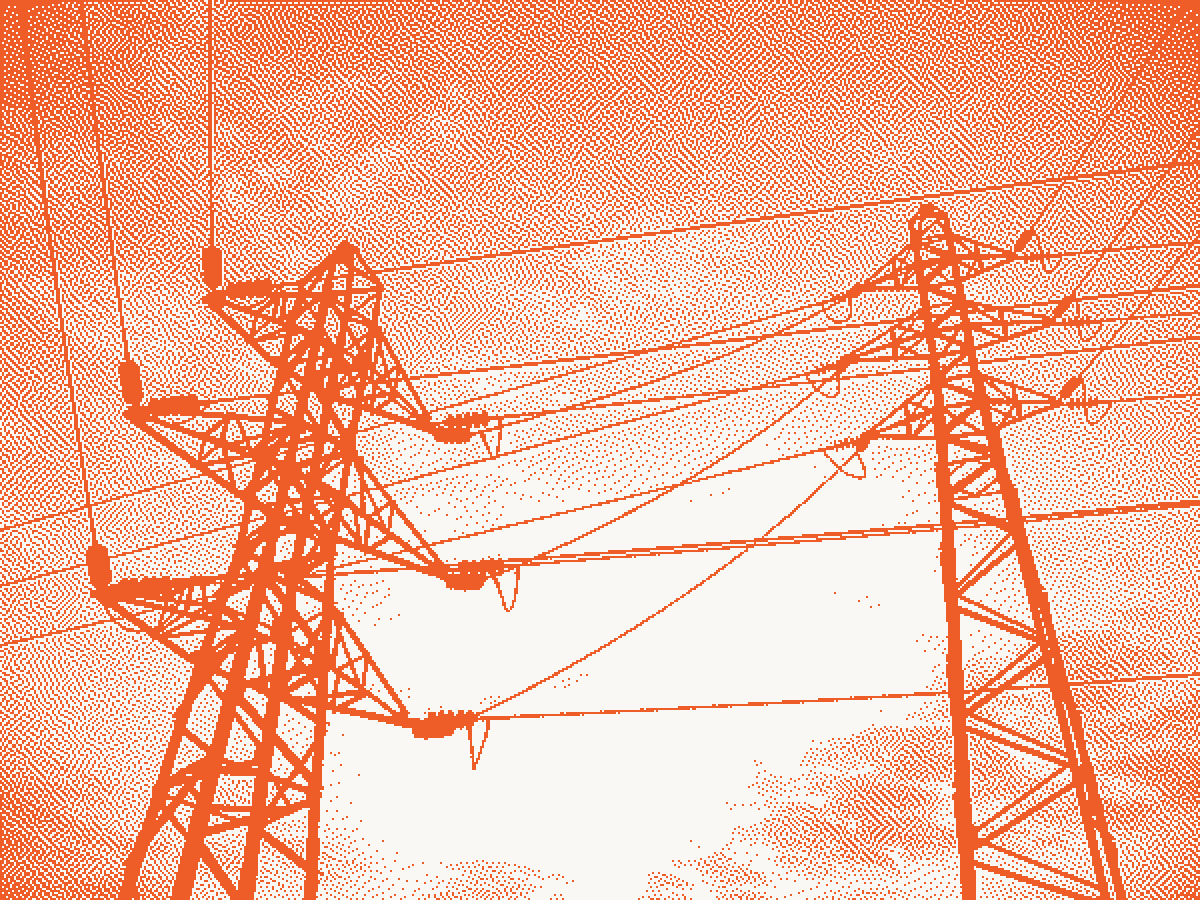
Overhead power lines in Iran. Mostafameraji, CC0.
OpenAI Writes a Community Compact, Then Pledges to Pay the Bill.
OpenAI released a National Community Compact on November 5, alongside a Compute Campus Policy Blueprint. The timing follows a cycle of local ballot measures on data center development that reportedly went against OpenAI’s buildout plans in roughly 40 of 41 votes.
The compact has two commitments that actually mean something. First: OpenAI will bear the full cost of powering compute campuses it owns and operates. The language is precise, and the precision matters. A campus that a third party owns and leases to OpenAI is not covered. Owned and operated. Second: no nondisclosure agreements with public officials. Local elected leaders can say what they know about the company’s plans in their jurisdiction.
The mechanism is straightforward: OpenAI got defeated at ballot boxes because communities feared the power bills and the opacity. The compact addresses both. The pattern: energy and community consent have been the fault line for data center development across the entire sector for two years. OpenAI is the first lab to respond with a written public commitment, not just a talking point. The read: a voluntary compact published by a company simultaneously closing a multi-billion-dollar funding round is not a surrender. It is a reframe. The builder’s move: if you are a local official evaluating an AI campus proposal, the compact sets a floor worth requesting. If you are a competitor, OpenAI just raised the bar on what communities will expect from an infrastructure announcement.
An HP 35, the first pocket scientific calculator. Seth Morabito, CC BY 2.0.
Anthropic Ships Personal Finance, Quietly Redefines What Claude Is For.
Anthropic opened a beta for Personal Finance in Claude on November 5. Available to Pro, Max, and Ultra plan subscribers in the US, the feature lets users link bank accounts, credit cards, loans, and investment accounts, and ask Claude questions about their money.
The mechanism: account connections use Plaid, the financial data aggregator. Claude can see balances and transaction history, run natural language queries against them, and surface spending patterns. It is not an investment advisor and it is not a budgeting app. It is a conversational layer on top of a financial data feed.
The blast radius is narrow by design, US-only, paid tiers only, opt-in only. The pattern: this is Anthropic’s most direct move into personal AI management, the category every lab has been building toward since the agent wave started. Claude already does calendar, documents, and email integrations. Personal Finance is the first time it touches money. The read: Anthropic just made Claude aware of your net worth. That is not nothing. The builder’s move: if you are building financial tools, the assumption that people will use a dedicated finance app rather than asking their AI assistant about their spending is now empirically weaker. The question is not whether Claude will eat that category. The question is how fast.
The signal lamps and coin slot of an old turnstile at the repository of the Polytechnical Museum in Technopolis, Moscow, 2015. Svetlov Artem, CC BY 4.0.
Anthropic Locks Down Enterprise, the Week It Needs To.
Also on November 5, Anthropic shipped a substantial set of enterprise controls: a security center with a central policy dashboard, inference hooks that let organizations intercept and inspect model calls before they execute, centralized management across deployments, and additional access controls, several in beta.
The inference hooks are the most interesting piece technically. The mechanism: operators register a custom endpoint in the Claude admin console. The hook intercepts the full request payload before Claude executes, runs whatever logic the operator defines, and execution proceeds only if the hook passes. This is guardrail infrastructure at the platform level, not the application level. The blast radius: any Enterprise operator who currently builds bespoke pre-flight checks can now use a first-party primitive instead. The pattern: Anthropic has been building enterprise trust infrastructure throughout 2026. This is the most complete version of that stack yet. The contrast: OpenAI is making offense easier to build; Anthropic is making defense easier to enforce. Both are correct reads of the same market. The builder’s move: if you are running Claude on enterprise data and have not read the inference hooks documentation, read it today.
Google: Running a restricted pre-release of Gemini 4 Carbon to US government testers and a subset of approved participants in its Fairwind cyber defense program. No API access. No consumer rollout. No date. A cyber-capable Gemini model in pre-release, the same week OpenAI ships its offensive cyber model to vetted customers, is not coincidence in cadence. That is two labs separately deciding that cyber is where the next capability contest lives.
Mistral: Open weights for Mistral Large 4, a 1-trillion-parameter model with 49 billion active parameters, were promised before the end of October. As of this edition, the weights have not shipped. The API preview has been live since October 6.
xAI: Quiet this week.
The Close
OpenAI rated its own model Critical and shipped it anyway.
That is a choice that tells you something about where the frontier thinks it is going.
The question is not whether that capability proliferates. The question is whether the vetting process moves faster than the capability does.
It never has before.
✦
Stay on the frontier
Get Shipped. in your inbox.
Daily digest at 9 PM ET. Weekly magazine every Friday morning. Six labs, one feed. No spam, one-click unsubscribe.
New every night at 9 PM ET
Back of Book · p.21 →
The Release Log
A 1:1 mirror of every Anthropic release in the window. Use it as reference. Share it with your team.
A
Models
1 Model in window
The frontier’s current capability race is running on two tracks: OpenAI leads offensive AI; Anthropic leads enterprise safety infrastructure.
OpenAI’s most specialized frontier release, rated Critical under its safety framework. Found working exploits for 948 Linux kernel vulnerabilities (588 previously unknown) and surfaced 81 unpatched Firefox bugs rated high severity by Mozilla. ExploitGym score: 48.5% vs 32.1% for its predecessor. Access limited to vetted Daybreak Red customers only.
How to useApply for Daybreak Red access via OpenAI’s security research portal. Not available on the standard API or in ChatGPT.
Why it mattersFirst frontier model explicitly rated Critical by its developer and shipped to customers. Sets the precedent for what responsible release of dangerous capability looks like in practice.
B
API and Platform
2 Release notes
Anthropic shipped a full enterprise security stack the same week OpenAI shipped its offensive cyber model.
Enterprise organizations can now tag Claude projects with existing billing codes (charge codes, client-matter numbers) to track spend at a project level. Available in beta for eligible Enterprise accounts.
How to useIn the Claude admin console, navigate to a project’s settings and assign a billing code tag. Spend attributed to that project will appear broken out by tag in the billing dashboard.
Anthropic shipped a security center with centralized policy management, inference hooks for pre-execution inspection of model calls, and additional access controls. Several features are in beta for Enterprise plan customers.
How to useInference hooks require an Enterprise plan and a custom endpoint registered in the Claude admin console. The endpoint receives the full request payload before Claude executes, and the response determines whether execution proceeds.
Why it mattersFirst-party guardrail infrastructure at the platform layer, not the application layer. Replaces custom pre-flight check logic for operators who have been building their own.
Pro, Max, and Ultra plan subscribers in the US can now link bank, credit card, loan, and investment accounts to Claude via Plaid. Claude can see balances and transaction history and answer natural language questions about spending and financial state.
How to useIn Claude web or desktop, go to Settings and look for the Personal Finance section. Connect accounts via Plaid. The feature is opt-in and US-only.
OpenAI published a National Community Compact committing to pay the full cost of powering compute campuses it owns and operates, and to drop NDAs with public officials. The companion Compute Campus Policy Blueprint sets energy and land-use standards OpenAI is asking legislators to codify.
Why it mattersFirst formal public commitment from a frontier lab on community and energy obligations for infrastructure buildout, following local ballot measures that reportedly went against data center development in 40 of 41 votes.