Daily · Nov 07 to Nov 08Nov 8, 2026 · Daily Edition4 releases in the log · Anthropic first
All the frontier that ships
from
The bottleneck changes by the week. Watch who is buying hardware versus who is raising capital. That gap is the tell.
Lead Story
Anthropic Buys the Grid
Anthropic buys 1.7 gigawatts of generators. xAI flips the watermark switch. OpenAI closes a round at $1.25 trillion.
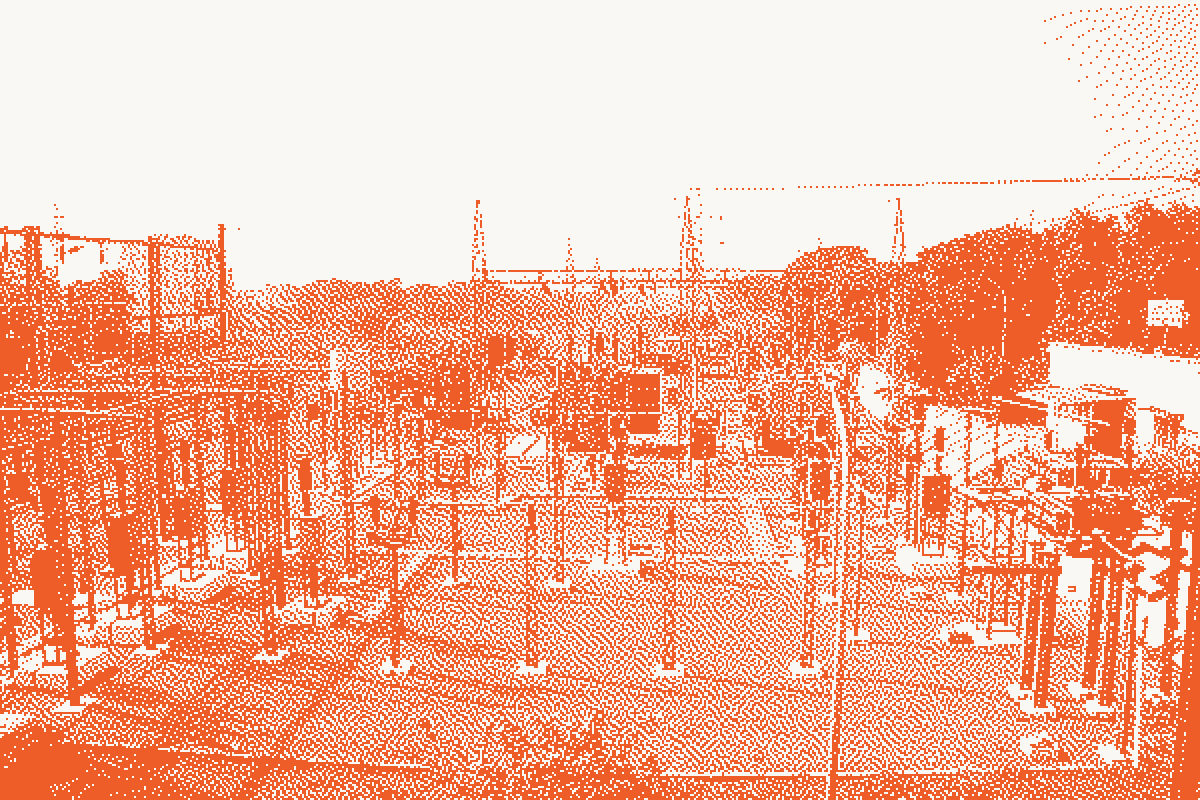
A railway traction substation at Vizianagaram, India. Saiphani02, CC BY 4.0.
1.7 gigawatts. $3.4 billion. Gas-fired generators acquired directly. The largest single power equipment purchase in AI lab history.
Source Financial Times, Bloomberg, CNBC, Reuters · Date Nov 08, 2026
By the numbers: 1.7 GW committed generation; $3.4B total deal value; 54 heavy-duty generator units; OnePWR Solutions, San Antonio.
The mechanism is different from how everyone else is doing this. Anthropic did not buy renewable energy credits. It did not enter long-term power purchase agreements. It did not lease data center space and let someone else worry about the power. It bought the generators.
1.7 gigawatts of them, in a deal struck with OnePWR Solutions, a San Antonio firm that had pre-ordered the hardware from Caterpillar two years ago but needed financing to complete the transaction. Anthropic stepped in and took over the orders directly. The Financial Times broke the story on November 8, confirmed within hours by Bloomberg, CNBC, and Reuters. OnePWR did not become an Anthropic subsidiary; Anthropic took over the existing equipment orders. That distinction matters: this is a hardware acquisition, not a company acquisition.
A paper watermark reading 'C S G', seen against the paper's laid and chain lines. Public domain.
xAI Grok API Watermarks Go Live
Starting November 7, xAI's API applies invisible statistical watermarks to text output from seven Grok models by default. The seven are grok-4.20 through grok-4.7. Text output, structured payloads, and tool-call arguments all carry the mark. Consumer Grok is not affected.
One day before the window, but covered and discussed all weekend: Anthropic added project-level cost tagging to Claude Enterprise in beta on November 6. Organizations can attach their own accounting identifiers to Claude projects, then pull spend reports grouped by those tags. The feature covers Claude web and Claude Code sessions authenticated through the Enterprise plan.
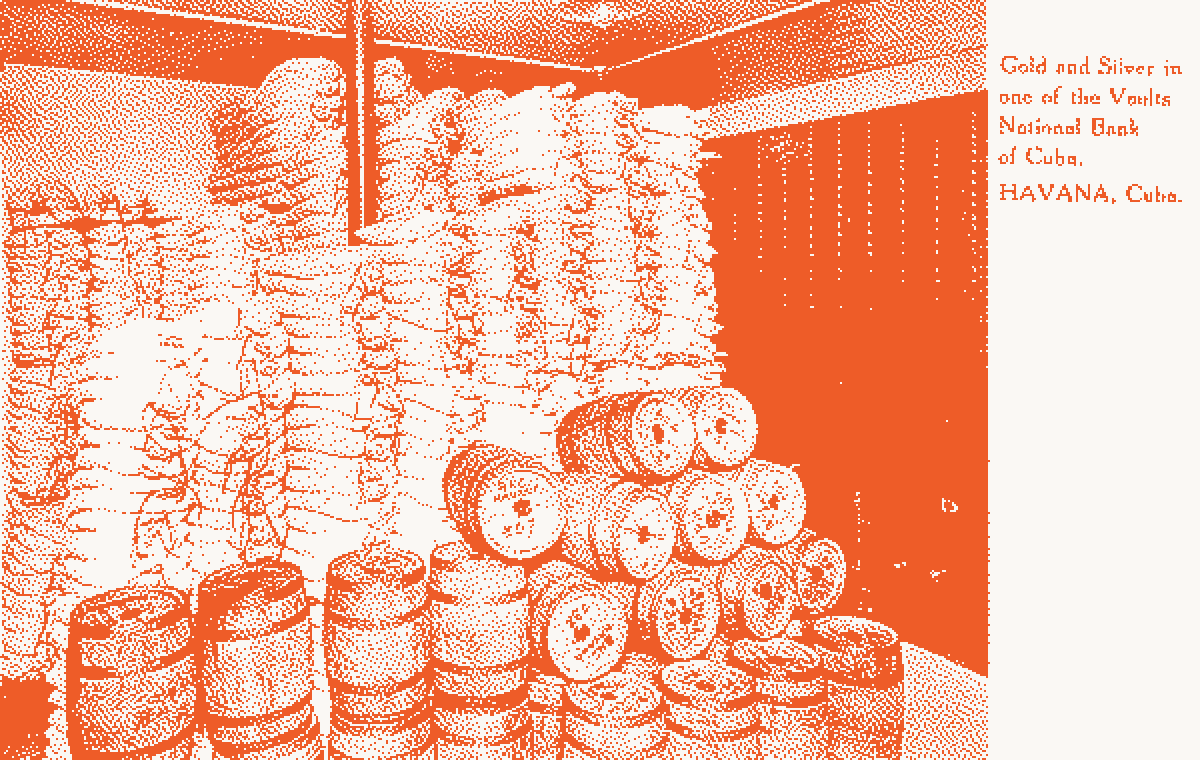
Sacks and barrels of gold and silver coin in one of the vaults of the National Bank of Cuba, Havana, from an early 20th-century postcard. Public domain.
OpenAI Closes $11B at $1.25 Trillion
OpenAI confirmed it has closed approximately $11 billion in the first tranche of a larger round that could reach $20 billion. The original target was $30 billion at a $1.4 trillion valuation; the round landed at $1.25 trillion as the AI sector cooled in public markets this fall. SoftBank and Abu Dhabi's MGX are reported investors, per Bloomberg.
The frontier AI labs spent the weekend shopping. Not for models.
Sunday morning. For generators, for funding tranches, for regulatory cover.
The week ended with Anthropic making the largest single purchase of power-generation equipment in AI lab history. 1.7 gigawatts of gas-fired generators. $3.4 billion. From a San Antonio supplier who had a pile of Caterpillar hardware waiting for a buyer. While OpenAI was closing the first tranche of a round that now tops $1.25 trillion in implied valuation, the company across the Bay was buying the actual machines that keep the lights on.
That contrast is the story. And then xAI flipped the watermark switch.
The Lead Story 01
Report by Eddie Belaval
Anthropic Buys the Grid.
A railway traction substation at Vizianagaram, India. Saiphani02, CC BY 4.0.
1.7 gigawatts. $3.4 billion. Gas-fired generators acquired directly. The largest single power equipment purchase in AI lab history.
Source Financial Times, Bloomberg, CNBC, Reuters · Date Nov 08, 2026
By the numbers: 1.7 GW committed generation; $3.4B total deal value; 54 heavy-duty generator units; OnePWR Solutions, San Antonio.
The mechanism is different from how everyone else is doing this. Anthropic did not buy renewable energy credits. It did not enter long-term power purchase agreements. It did not lease data center space and let someone else worry about the power. It bought the generators.
1.7 gigawatts of them, in a deal struck with OnePWR Solutions, a San Antonio firm that had pre-ordered the hardware from Caterpillar two years ago but needed financing to complete the transaction. Anthropic stepped in and took over the orders directly. The Financial Times broke the story on November 8, confirmed within hours by Bloomberg, CNBC, and Reuters. OnePWR did not become an Anthropic subsidiary; Anthropic took over the existing equipment orders. That distinction matters: this is a hardware acquisition, not a company acquisition.
The blast radius starts at Anthropic itself. The company is now responsible for managing that hardware, the fuel costs, the air permits, the operational complexity. It is a commitment that runs deeper than writing a check for data center capacity. But the business logic holds: power availability is Anthropic's current theory of the constraint. Not GPU availability. Not model quality. Power. A company certain of its model roadmap is spending like the bottleneck is in the grid.
The pattern connects. Anthropic signed a reported $1.25 billion-per-month arrangement with SpaceX to rent data center space in May. It is building a campus in New Carlisle, Indiana with Amazon, where satellite tracking shows generator installation already underway. And now it has acquired generation capacity at a scale no AI lab has previously attempted in a single transaction. Three infrastructure moves in six months is not hedging. It is a strategy.
The read: Anthropic has decided that owning the power is the moat. Not the cheapest moat. Not the cleanest moat. Gas-fired generators are not renewable, and that tension with its stated mission is real. But a moat built from 1.7 gigawatts of committed generation cannot be reproduced in a quarter by a competitor who is still signing letters of intent for data center space. The labs that move on power now may find the capacity spoken for when they get there.
The builder's move: nothing changes for Claude API users today. The generators will back data center capacity that takes time to build and deploy. But if you are evaluating Claude against GPT-5 on reliability and regional availability for the next eighteen months, this week's news is a data point about where Anthropic believes the expansion headroom lives.
The contrast: OpenAI closed approximately $11 billion in the first tranche of a round initially targeting $30 billion-plus, at a valuation that peaked at $1.4 trillion before landing at $1.25 trillion. It is an extraordinary number. It is also a capital raise, not a hardware purchase. Anthropic is buying generators. OpenAI is collecting checks. Different theories of where the actual scarcity lives.
✦ ✦ ✦
Shipped. · Also shipped
Also shipped
A paper watermark reading 'C S G', seen against the paper's laid and chain lines. Public domain.
xAI Grok API Watermarks Go Live.
Starting November 7, xAI's API applies invisible statistical watermarks to text output from seven Grok models by default. The seven are grok-4.20 through grok-4.7. Text output, structured payloads, and tool-call arguments all carry the mark. Consumer Grok is not affected.
Statistical watermarking shifts the probability distribution at inference time, biasing toward certain token choices in a detectable pattern. The signal builds with length; short outputs are harder to detect confidently. The API response includes an x-watermark header confirming the status per request. xAI is offering a detection endpoint, but it requires a separate application before use.
The compliance frame is EU AI Act, Article 50. That provision requires AI system providers to disclose when content is AI-generated. xAI is not the first lab here, but it is notable for having been vocal about skepticism toward mandatory watermarking earlier this year. The watermark is on by default. Team admins can opt out per model, but opting out "shifts legal responsibility" to the team, per xAI's own documentation. That formulation deserves a read-through before you disable it.
The contrast: Anthropic and OpenAI both signed voluntary AI content watermarking pledges earlier this year. xAI was absent from that pledge. This implementation is regulatory compliance, not a voluntary commitment, and it comes with an opt-out that relocates legal exposure rather than eliminating it. That is a different posture, and it is worth noticing.
One day before the window, but covered and discussed all weekend: Anthropic added project-level cost tagging to Claude Enterprise in beta on November 6. Organizations can attach their own accounting identifiers to Claude projects, then pull spend reports grouped by those tags. The feature covers Claude web and Claude Code sessions authenticated through the Enterprise plan.
The blast radius is any enterprise running Claude Code across multiple client engagements or cost centers. Claude Code became the dominant expense line for many shops almost overnight, and allocating that spend back to clients or charge codes has been an open gap. The timing also follows Anthropic's shift to usage-based Enterprise pricing, which made cost visibility a sharper operational question.
The builder's move: include beta header anthropic-beta: ce-project-tags-2026-10-09 in your API requests. Build your tag taxonomy in the console before you start. Keep client names out of tag values, as the filter text travels in the URL.
Sacks and barrels of gold and silver coin in one of the vaults of the National Bank of Cuba, Havana, from an early 20th-century postcard. Public domain.
OpenAI Closes $11B at $1.25 Trillion.
OpenAI confirmed it has closed approximately $11 billion in the first tranche of a larger round that could reach $20 billion. The original target was $30 billion at a $1.4 trillion valuation; the round landed at $1.25 trillion as the AI sector cooled in public markets this fall. SoftBank and Abu Dhabi's MGX are reported investors, per Bloomberg. OpenAI declined to comment.
The read is not that OpenAI is struggling. Eleven billion dollars at a $1.25 trillion valuation is an extraordinary outcome. The read is that the market has started placing a ceiling. The company that was targeting $1.4 trillion three months ago closed $150 billion lower. It is not a failure. It is a data point about where institutional capital currently thinks the frontier AI market tops.
Mistral Large 4 weights settling in. The open weights arrived on Hugging Face on October 29. At 1.06 TB across 54 files, it is the largest open-weight model from a European lab and the first at the trillion-parameter scale to arrive without a gate or approval queue. No click-through, no approval queue, no account requirement beyond Hugging Face's standard terms. A quantized version for Nvidia B200/B300 GPUs is in progress. The model shipped with three extra weeks of reinforcement learning relative to its October 6 preview.
Anthropic usage policy update on November 12. The specifics have not been fully detailed publicly.
Google Messages redesign in beta. Google is testing a redesign that elevates pinned chats and shifts the Gemini shortcut in the texting UI. No date yet for wider rollout.
The Close
Three bills came due this weekend on the frontier.
One lab bought generators. One closed a round at a trillion-dollar valuation. One switched on the compliance layer.
The bottleneck changes by the week. Watch who is buying hardware versus who is raising capital. That gap is the tell.
✦
Stay on the frontier
Get Shipped. in your inbox.
Daily digest at 9 PM ET. Weekly magazine every Friday morning. Six labs, one feed. No spam, one-click unsubscribe.
New every night at 9 PM ET
Back of Book · p.21 →
The Release Log
A 1:1 mirror of every Anthropic release in the window. Use it as reference. Share it with your team.
Anthropic added project-level cost tagging to Claude Enterprise in beta. Organizations can attach accounting identifiers to Claude projects and pull spend reports grouped by those tags, covering Claude web and Claude Code sessions on Enterprise plans.
How to useInclude beta header anthropic-beta: ce-project-tags-2026-10-09 in API requests. Set up your tag taxonomy in the admin console before starting. Keep client names out of tag values.
B
News and Partnerships
3 Release notes
Infrastructure, compliance, and capital across the frontier.
Anthropic agreed to pay $3.4 billion for 1.7 gigawatts of gas-fired generators from San Antonio-based OnePWR Solutions, taking over existing equipment orders originally placed with Caterpillar. The largest single power equipment purchase by an AI lab. Anthropic did not acquire OnePWR itself.
Why it mattersSignals that Anthropic views power availability, not GPU availability, as the primary infrastructure constraint for model deployment expansion.
xAI switched on invisible statistical text watermarks by default across seven Grok API models (grok-4.20 through grok-4.7) on November 7, citing EU AI Act Article 50 compliance. Consumer Grok is unaffected. Team admins can opt out per model via the xAI Console, shifting legal responsibility to the team.
How to useCheck the x-watermark response header on API calls. Apply for the detection endpoint separately if provenance verification is needed.
OpenAI closed approximately $11 billion in the first tranche of a larger round targeting up to $20 billion. The valuation landed at $1.25 trillion, down from an initial $1.4 trillion target. SoftBank and Abu Dhabi's MGX are reported investors. OpenAI declined to comment on the round.