Daily · Nov 10 to Nov 11Nov 11, 2026 · Daily Edition6 releases in the log · Anthropic first
All the frontier that ships
from
The floppy disks are gone. The question is whether the meeting is a feature or a company. It is a company.
Lead Story
The Office Suite Play
Anthropic builds a desk, DeepMind proves the math, and OpenAI counts its money.
Rows of workstations in an empty open-plan office, from the LOOM office workspaces photograph. Loominade, CC0.
Anthropic released Claude Meetings, Whiteboards, Sheets, and Data on November 10, beginning its direct assault on the productivity layer of enterprise software.
Source TechCrunch, Nov 10 · Area Apps / Enterprise · Lab Anthropic
By the numbers: 4 products in 1 day 2 in beta (Meetings, Sheets) 1 to GA (Data) 3 plugin partners (Adobe, Atlassian, HubSpot) 30 years of office software this competes with.
You can tell a lot about where a company thinks it is headed by which products it ships the week it files for an IPO. Anthropic chose to build a desk.
Claude Meetings launches in beta for Team and Enterprise plans. It joins your Google Meet calls as a visible participant, identifies itself in chat, and refuses entry if an unapproved external guest joins. That last detail matters: the participation is disclosed, not hidden. The minutes come standard; the judgment calls come from you.
Fable 5.2 Tops the Index, Mythos 5.2 Goes to the Vetted
Anthropic released Claude Fable 5.2 and Claude Mythos 5.2 on November 9, the day before the workspace launch, quietly completing a two-day product sprint. Fable 5.2 is the general-availability flagship and landed at number one on the Artificial Analysis Intelligence Index v5, scoring 65. Mythos 5.
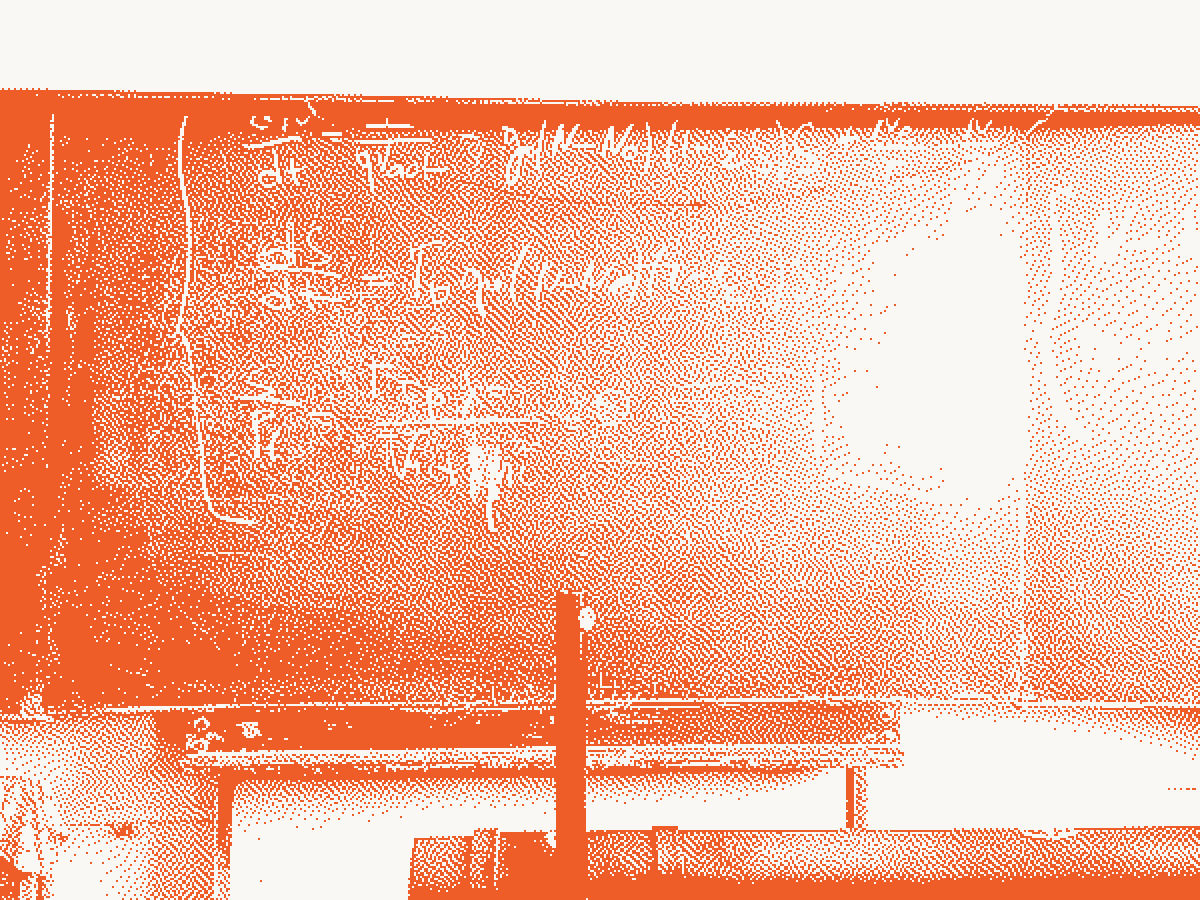
Handwritten formulas covering an old blackboard, Minsk, Belarus. Roman Mager roman_lazygeek, CC0.
DeepMind Runs a Formal Proof on Signal's Code
Google DeepMind used its Gemini 4 Carbon model to mathematically verify the correctness of Signal's core encryption library, libsignal. The project, called AlphaProof Code, ran a multi-model agentic framework that produced Lean proofs over approximately four weeks. This is not a security audit in the conventional sense. It is formal verification, which means the proof is machine-checkable.
DeepMind Ships New Gemini Robotics and AlphaGenome 2
Also from DeepMind on November 11: an updated Gemini Robotics model the company describes as its most capable vision-language-action model, with advances in dexterity, full-body control and multi-robot collaboration. Same day, DeepMind announced AlphaGenome 2, a model for predicting how DNA sequences and their variations affect human cell types.
A video call ends. You look at the transcript, the action items, the whiteboard that filled in while you were talking. Only one of those was written by a human. The others were written by Claude.
That is not a demo. That is Tuesday, November 10. Anthropic shipped Claude Meetings, Claude Whiteboards, Claude Sheets, and flipped Claude Data to general availability in a single morning push. A direct challenge to the productivity suites that have defined office software for 30 years. Meanwhile DeepMind used AI agents to mathematically prove that Signal's encryption code is correct, a first for formal verification at that scale. And OpenAI crossed $10 billion in quarterly revenue, which means the market is real and the incumbents are running out of time to decide what to do about it.
Three things happened yesterday that each would have been the week's story in any other week. They all landed on Tuesday.
The Lead Story 01
Report by Eddie Belaval
The Office Suite Play.
Rows of workstations in an empty open-plan office, from the LOOM office workspaces photograph. Loominade, CC0.
Anthropic released Claude Meetings, Whiteboards, Sheets, and Data on November 10, beginning its direct assault on the productivity layer of enterprise software.
Source TechCrunch, Nov 10 · Area Apps / Enterprise · Lab Anthropic
By the numbers: 4 products in 1 day 2 in beta (Meetings, Sheets) 1 to GA (Data) 3 plugin partners (Adobe, Atlassian, HubSpot) 30 years of office software this competes with.
You can tell a lot about where a company thinks it is headed by which products it ships the week it files for an IPO. Anthropic chose to build a desk.
Claude Meetings launches in beta for Team and Enterprise plans. It joins your Google Meet calls as a visible participant, identifies itself in chat, and refuses entry if an unapproved external guest joins. That last detail matters: the participation is disclosed, not hidden. The minutes come standard; the judgment calls come from you.
Attached to Meetings is Whiteboards, which turns whatever the room decides into a visual layout with timelines and deadlines. It works mid-call, so the board does not just record, it thinks alongside the conversation. Claude Sheets, also in beta, rounds out the suite as a collaborative spreadsheet, with Anthropic's product lead taking care to describe it as not built for advanced financial modeling. That is not a hedge; it is a scope limit. This is not Excel. It is the layer under Excel that decides what goes in it.
Claude Data, formerly Claude Dashboards, graduated to general availability the same day. Full-app plugins from Adobe, Atlassian, and HubSpot now run inside Claude.
The mechanism here is worth pausing on. Anthropic is not building another AI wrapper on top of Google Workspace. It is building the workspace. The session, the board, the sheet, the data layer: all of it surfaces in one place, all of it answered to by one model. That is not an add-on play. That is a replacement architecture.
The blast radius is specific: IT buyers at mid-market and enterprise accounts who are currently renewing Microsoft 365 or Google Workspace licenses and have been told by their AI vendors that "integration is coming." If Claude Meetings works, that conversation shifts from integration to consolidation.
The pattern: this is Anthropic's third major workplace bet in 90 days, following the Excel and PowerPoint connectors and the Cowork multiplayer sessions from earlier this quarter. The pace is deliberate, not scattered. They are building a product surface layer by layer, each piece usable standalone but designed to fit together.
The read: Anthropic is spending its IPO roadshow window proving to institutional investors that there is a durable product business in the model, not just an API rental. The suite launch is as much a valuation argument as a product strategy. It is a statement that the margin can come from the desk, not just from the token count.
Contrast: Google and Microsoft have been here for 30 years. DeepMind's Gemini is not yet a workspace product, and OpenAI's Assistants API does not answer your video calls. Anthropic just moved onto the same floor.
Builder's move: if you are on Team or Enterprise, enable Claude Meetings on an internal call this week before it defaults on. The governance settings matter here, specifically who counts as an approved external guest. Set that policy before it defaults to your whole domain.
✦ ✦ ✦
Shipped. · Also shipped
Also shipped
Fable 5.2 Tops the Index, Mythos 5.2 Goes to the Vetted.
Anthropic released Claude Fable 5.2 and Claude Mythos 5.2 on November 9, the day before the workspace launch, quietly completing a two-day product sprint. Fable 5.2 is the general-availability flagship and landed at number one on the Artificial Analysis Intelligence Index v5, scoring 65. Mythos 5.2 shares the same underlying model but removes cyber and biology misuse safeguards and is restricted to organizations verified through Anthropic's Life Sciences and Cyber Verification Programs. Both run 30 percent faster than their 5.1 predecessors. Pricing is $8 input / $40 output per million tokens, with a fast-mode option at double those rates. Medium effort is now the default in Claude apps and Claude Code.
The public/restricted split is the story inside the story. Mythos 5.2's existence is a concession that there are legitimate use cases, biosecurity research, red-teaming, that require a model without certain safety guardrails, and that Anthropic would rather supply them through a controlled channel than lose the work to labs with no guardrails at all. That is a defensible position. It is also a position you do not take lightly the week you file for a public offering.
Handwritten formulas covering an old blackboard, Minsk, Belarus. Roman Mager roman_lazygeek, CC0.
DeepMind Runs a Formal Proof on Signal's Code.
Google DeepMind used its Gemini 4 Carbon model to mathematically verify the correctness of Signal's core encryption library, libsignal. The project, called AlphaProof Code, ran a multi-model agentic framework that produced Lean proofs over approximately four weeks. This is not a security audit in the conventional sense. It is formal verification, which means the proof is machine-checkable. If it holds, the library's cryptographic guarantees are established by logic, not by a reviewer who might have missed something.
Formal verification at this scale is rare. It has historically required years of human specialist effort. DeepMind and Gemini 4 Carbon did it in a month on the library that secures roughly a billion conversations. The gap between that and what a team of specialists would have billed is the story, and it points at a category of technical work that has been gated by human cost for decades.
DeepMind Ships New Gemini Robotics and AlphaGenome 2.
Also from DeepMind on November 11: an updated Gemini Robotics model the company describes as its most capable vision-language-action model, with advances in dexterity, full-body control and multi-robot collaboration. Same day, DeepMind announced AlphaGenome 2, a model for predicting how DNA sequences and their variations affect human cell types. The genomics work builds on AlphaGenome 1 from earlier this year and is aimed at accelerating biology research.
Two domains in one day, robotics and genomics, from one lab. DeepMind's research surface is wider than any other lab's, and that breadth is starting to look less like a portfolio hedge and more like a platform.
Bloomberg reported on November 11 that OpenAI's quarterly revenue crossed $10 billion for the first time, putting the annual run rate at approximately $50 billion. The number comes from anonymous sources, so treat it as directionally correct. Even at a discount, it confirms that the AI platform market is real and large enough to absorb a $1.25 trillion valuation, which OpenAI raised against in an $11 billion round reported the week prior.
For context: $10 billion per quarter from a company that did not exist as a commercial entity seven years ago is not a normal technology growth curve. It is what happens when an entire category of software spending shifts to a new provider faster than the incumbents can respond.
Mistral has been quiet for two days after active releases last week. Mistral Studio and the Voxtral transcription update landed November 5-6. The rumored new large model has not shipped as of Wednesday evening. xAI is similarly dark on product news; the Colossus 2 compute facility in Memphis is their current public story, with roughly 555,000 GPUs, and Grok has not had a major model update since October.
Meta's infrastructure chief Santosh Janardhan announced he will step down in early 2027. A former senior AWS executive is taking over, which suggests Meta is reorienting its data center build-out toward AI training workloads. Worth watching: whether this changes the pace of Llama development or the timeline for Meta's enterprise AI push.
Anthropic IPO roadshow dates: mid-November filings point to November 19 or 20 as the target. If that is right, next week's daily is likely to cover the pricing.
The Close
The office suite wars started when Microsoft Office shipped on three floppy disks in 1989.
They got weird when Google Docs showed that web-native collaboration was the actual product.
Now Claude is in the meeting.
The floppy disks are gone. The question is whether the meeting is a feature or a company. It is a company.
✦
Stay on the frontier
Get Shipped. in your inbox.
Daily digest at 9 PM ET. Weekly magazine every Friday morning. Six labs, one feed. No spam, one-click unsubscribe.
New every night at 9 PM ET
Back of Book · p.21 →
The Release Log
A 1:1 mirror of every Anthropic release in the window. Use it as reference. Share it with your team.
A
Models
1 Model in window
Two Anthropic model releases in a single sprint, one open and one restricted.
Anthropic released two models. Claude Fable 5.2 is the general-availability flagship, reaching number one on the Artificial Analysis Intelligence Index v5 (score: 65). Claude Mythos 5.2 shares the same underlying model but removes cyber and biology misuse safeguards and is restricted to organizations verified through Anthropic's Life Sciences and Cyber Verification Programs. Both run 30 percent faster than their 5.1 predecessors.
How to useFable 5.2 is the default for Claude apps and Claude Code. Pricing: $8 per million input tokens / $40 per million output tokens. Fast mode runs at 2x those rates. Medium is now the default effort level. Access Mythos 5.2 by applying through Anthropic's verification programs.
Why it mattersThe public/restricted split is a first for Anthropic: a model tier with safety guardrails removed by design, available only inside a verified channel. The precedent matters more than the release.
B
Apps
1 Release notes
Anthropic's workplace suite: four products launched in one morning.
Anthropic launched a full workplace suite. Claude Meetings (beta, Team and Enterprise): Claude joins Google Meet calls as a visible participant, produces action items and summaries, and auto-exits if an unapproved external guest joins. Claude Whiteboards (beta): shared visual boards that fill in during calls. Claude Sheets (beta, paid subscribers): collaborative spreadsheets, explicitly scoped to basic modeling, not advanced financial work. Claude Data (GA): formerly Claude Dashboards. Full-app plugins from Adobe, Atlassian, and HubSpot now run inside Claude.
How to useMeetings and Whiteboards: enable in Team or Enterprise admin settings; check external-guest policy before enabling. Sheets: available across web, desktop, and mobile for paid subscribers. Data: available to all Claude plans. Full-app plugins: install from the Claude app sidebar.
C
Research
2 versions
DeepMind with two formal research releases in two days, covering formal verification, robotics, and genomics.
Google DeepMind ran a multi-model agentic formal verification pipeline, AlphaProof Code, powered by Gemini 4 Carbon, on Signal's libsignal encryption library. The pipeline produced machine-checkable Lean proofs over approximately four weeks, providing mathematical proof of the library's correctness.
Why it mattersFormal verification at consumer-platform scale is a first. The technical category this unlocks, AI-driven proof of critical software, has been cost-prohibitive for most organizations. This changes that calculus.
DeepMind announced a new generation of Gemini Robotics, described as its most capable vision-language-action model with whole-body control and multi-robot coordination advances, and AlphaGenome 2, a model for predicting how DNA variations affect human cell types. Both are research releases, not product APIs.
D
News
2 App releases
Revenue milestones and an executive change on the infrastructure side.
Bloomberg reported, citing unnamed sources, that OpenAI's quarterly revenue exceeded $10 billion for the first time, implying an annual run rate of approximately $50 billion. This follows the company's reported $11 billion raise at a $1.25 trillion valuation earlier in November.
Why it mattersA $50 billion annual run rate from a company that did not exist as a commercial entity seven years ago tells every enterprise software incumbent exactly how much time they have left.
Santosh Janardhan, Meta's head of infrastructure and co-head of engineering, will leave in early 2027. A former senior AWS executive will take over as Meta continues scaling its data center capacity for AI workloads. No change to the Llama roadmap was announced.