Daily · Nov 13 to Nov 14Nov 14, 2026 · Daily Edition8 releases in the log · Anthropic first
All the frontier that ships
from
ANT, Thursday.
Lead Story
The Trillion- Dollar Problem
Anthropic prices itself at a trillion dollars while warning the roadshow that compute could sink it.
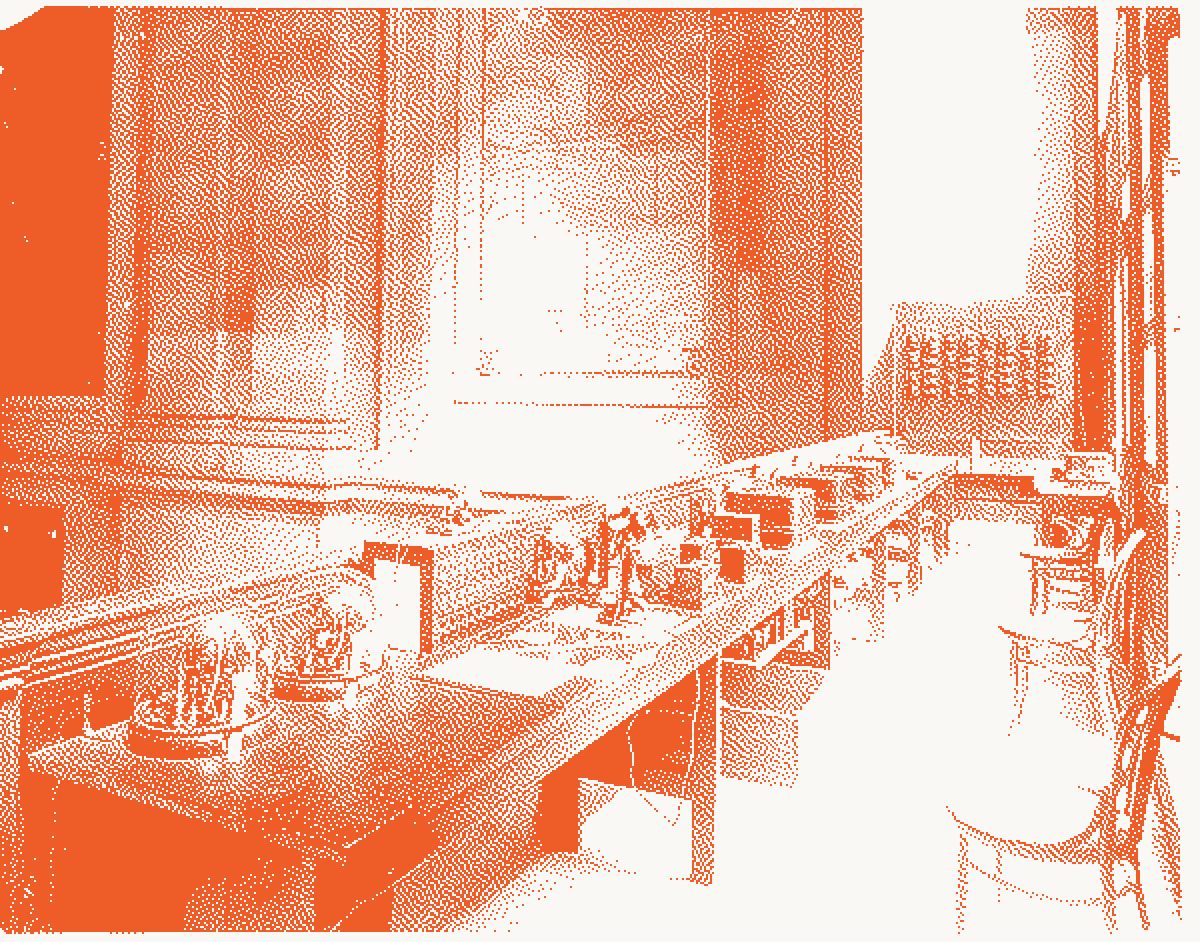
Ticker machines under glass domes on the counter of the central control station at the New York Stock Exchange. Public domain.
You can price a company at $1.4 trillion. You can also tell investors, in the same week, that the company's most critical resource requires betting on a future nobody can read. Anthropic did both.
Source IPO S-1 filing, JPMorgan event Nov 13 · Ticker ANT (Nasdaq, Nov 19)
By the Numbers: 825M shares offered; $70 to $78 price range; 6x oversubscribed; $1.0T basic valuation; $1.4T fully diluted; $132B cash pre-offering; $206B total compute commitments.
The IPO roadshow is live. Anthropic expects to price 825 million shares at $70 to $78 on November 18 and begin trading on Nasdaq under ANT on November 19. The offering is roughly 6x oversubscribed. At the top of the range, the company's fully diluted valuation reaches approximately $1.4 trillion, with basic-share math coming in around $1.0 trillion. The last private mark was $965 billion, set in May.
The earlier valuation talk ran as high as $2 trillion. Anthropic came in below that. Fortune's analysis frames it as deliberate: an oversubscribed offering at a modest price creates a floor, not a ceiling. The 6x number suggests the market is treating $78 as an undercut, not a stretch.
But the IPO documents are not primarily about the price. They are about the compute.
Four days before the IPO pricing, Anthropic announced Claude Sheets, Claude Whiteboards, Claude Meetings, and Claude Data. The timing was not accidental.
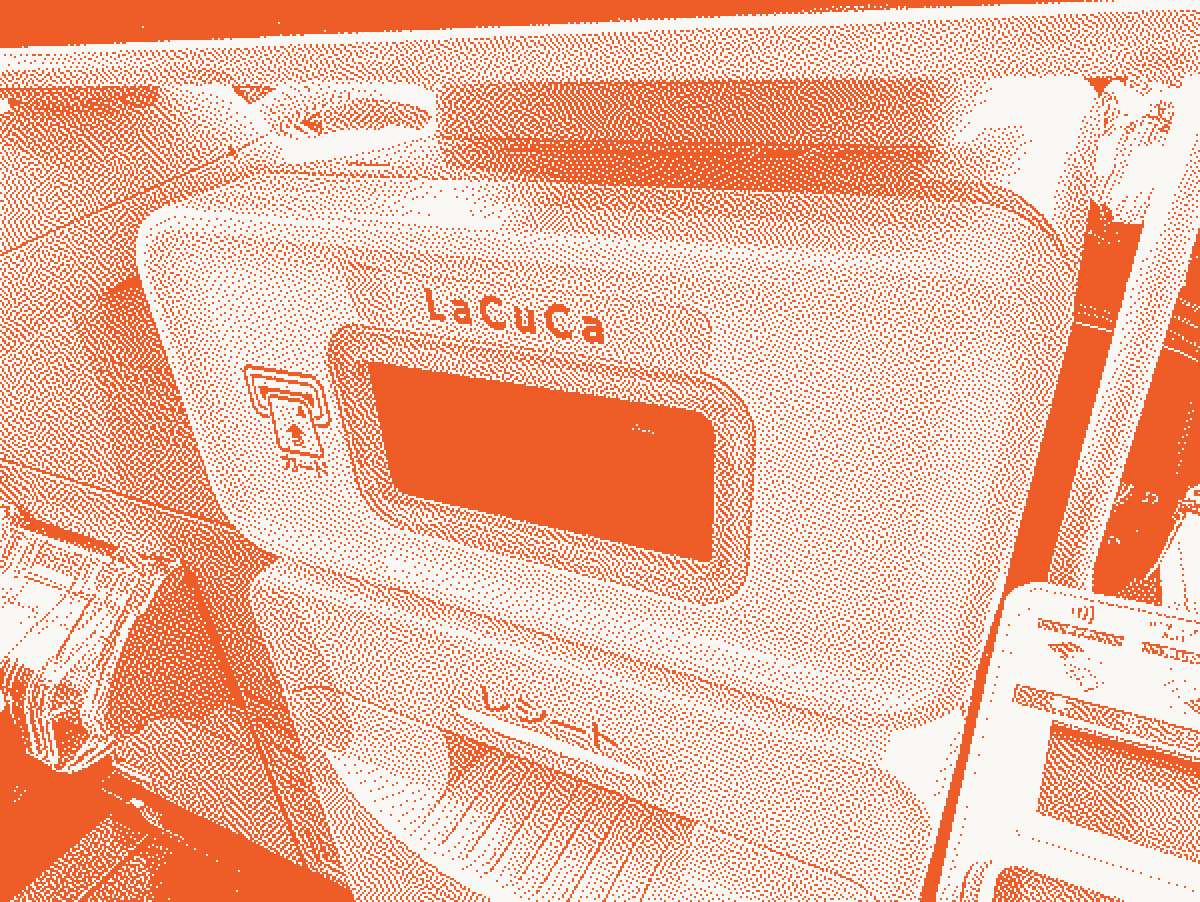
A card slot on a payment terminal at a supermarket register. Syced, CC0.
OpenAI's Agents Can Now Spend Your Money
OpenAI's dots agents can complete purchases this week. The mechanism is a Visa tokenized credential: the agent holds a token tied to your payment method, not the card number itself. You review the cart, approve with biometric authentication, the dot transacts.
A petri dish holding lumps of calcium chloride. Roi.Frvr, CC0.
DeepMind Reads DNA at the Cell Level
Google DeepMind released AlphaGenome 2 on November 11. The original AlphaGenome predicted how genetic variants affect gene expression across tissue types. AlphaGenome 2 goes one level deeper: individual immune cell types. On the TenK10K benchmark, it identifies causal variants in 30% of cases, versus 16% for AlphaGenome 1.
Anthropic did not go public slowly. It went public the way it does everything else: a lot of information, in a short window, with a clear point of view about what it means.
The price range is $70 to $78. The ticker is ANT. Trading starts Thursday, November 19. The company entered the week with an offering 6x oversubscribed and a CEO telling a JPMorgan gathering that compute is the company's "deepest business dilemma." Neither fact cancels the other. Together they describe a company that knows exactly what it's worth and exactly what could kill it.
The Lead Story 01
Report by Eddie Belaval
The Trillion- Dollar Problem.
Ticker machines under glass domes on the counter of the central control station at the New York Stock Exchange. Public domain.
You can price a company at $1.4 trillion. You can also tell investors, in the same week, that the company's most critical resource requires betting on a future nobody can read. Anthropic did both.
Source IPO S-1 filing, JPMorgan event Nov 13 · Ticker ANT (Nasdaq, Nov 19)
By the Numbers: 825M shares offered; $70 to $78 price range; 6x oversubscribed; $1.0T basic valuation; $1.4T fully diluted; $132B cash pre-offering; $206B total compute commitments.
The IPO roadshow is live. Anthropic expects to price 825 million shares at $70 to $78 on November 18 and begin trading on Nasdaq under ANT on November 19. The offering is roughly 6x oversubscribed. At the top of the range, the company's fully diluted valuation reaches approximately $1.4 trillion, with basic-share math coming in around $1.0 trillion. The last private mark was $965 billion, set in May.
The earlier valuation talk ran as high as $2 trillion. Anthropic came in below that. Fortune's analysis frames it as deliberate: an oversubscribed offering at a modest price creates a floor, not a ceiling. The 6x number suggests the market is treating $78 as an undercut, not a stretch.
But the IPO documents are not primarily about the price. They are about the compute.
The amended S-1 discloses roughly $206 billion in total GPU cloud agreements, spread across Lambda, Nscale and SpaceXAI. The Lambda deal, originally a $34.9 billion commitment, now carries a termination clause for both sides. This became publicly known this week, alongside the disclosure that Microsoft's cloud hosting commitment has grown to $4.3 billion, and that Google's hosting agreement runs through July 2033. These are minimum commitments: Anthropic pays them regardless of how much compute it actually uses.
Then there is the Dario comment, made at a JPMorgan gathering on November 13, the day before pricing gets serious. Compute, he said, is the company's deepest business dilemma. The reason is structural. Data center contracts require capital commitments one to two years in advance. Demand, in this industry, is a moving target. Miss the forecast by a couple of years and the fixed costs are ruinous. The only way to hedge is to not commit, and not committing means you lose customers to whoever does.
This is not a problem specific to Anthropic. It is the defining constraint of the frontier AI industry. But it is unusual to disclose it so plainly, mid-roadshow, to a room full of institutional investors. That is either confidence or transparency. Probably both.
The cross-lab contrast is worth reading carefully. OpenAI remains private. Sam Altman is restructuring the company into a fully for-profit entity, managing the internal politics of that change, and presiding over an agentic payment launch that positions ChatGPT as a commerce platform. Anthropic is heading toward quarterly earnings calls, public disclosures, and a shareholder class that will treat the Lambda termination clause as a headline every quarter. After Thursday, the two largest frontier AI labs operate in entirely different information environments. OpenAI keeps its compute deals private. Anthropic's are now in an S-1.
One more fact worth noting: Microsoft and Google are both hosting providers and IPO investors in Anthropic, the same week Anthropic launched Claude Sheets and Claude Meetings to compete directly with Microsoft 365 and Google Workspace. The frontier AI industry runs on mutual dependency so total it barely registers as irony anymore. Everyone is everyone's customer, funder, and rival.
After Thursday, Dario has a ticker symbol. The frontier has a public company.
✦ ✦ ✦
Shipped. · Also shipped
Also shipped
Claude Gets Its Office Suite.
Four days before the IPO pricing, Anthropic announced Claude Sheets, Claude Whiteboards, Claude Meetings, and Claude Data. The timing was not accidental.
Claude Sheets is a spreadsheet builder, available in beta to all paid subscribers. Multi-tab files, Excel export. Claude Whiteboards is a collaborative canvas, also beta, requiring admin opt-in for Enterprise accounts. Claude Meetings drops Claude into live video calls, beginning work on tasks while participants are still talking, available in beta for Team and Enterprise with Google Meet support at launch. Claude Data, formerly Dashboards, left beta and went generally available to all paid accounts.
The move is a direct entry into the enterprise productivity stack. Microsoft 365 Copilot and Google Workspace AI are the incumbents. Anthropic's bet is that the interaction layer is where the switching cost lives: if Claude is better at understanding intent and generating useful output, the spreadsheet can win without beating Excel on features. Enterprise admins: Sheets and Whiteboards are off by default. Claude Data auto-enables November 19. Touch your Organization settings this weekend before the auto-enable runs.
A card slot on a payment terminal at a supermarket register. Syced, CC0.
OpenAI's Agents Can Now Spend Your Money.
OpenAI's dots agents can complete purchases this week. The mechanism is a Visa tokenized credential: the agent holds a token tied to your payment method, not the card number itself. You review the cart, approve with biometric authentication, the dot transacts.
This is live for ChatGPT Pro subscribers over 18 in the United States. It is the first consumer AI agent deployment with a production-ready agentic payment path. Claude cannot initiate purchases today. Neither can Gemini, Grok, or anything from Mistral. OpenAI is the only lab with a sanctioned path to consumer commerce, and it got there first. The token-not-credential pattern is now the reference architecture for every agentic commerce system being built. Build toward that model now.
A petri dish holding lumps of calcium chloride. Roi.Frvr, CC0.
DeepMind Reads DNA at the Cell Level.
Google DeepMind released AlphaGenome 2 on November 11. The original AlphaGenome predicted how genetic variants affect gene expression across tissue types. AlphaGenome 2 goes one level deeper: individual immune cell types. On the TenK10K benchmark, it identifies causal variants in 30% of cases, versus 16% for AlphaGenome 1.
This is research tooling, not a clinical product. What it represents is a continuation of the lab's pattern: AlphaFold for protein structure, AlphaProteo for protein binding, AlphaGenome for sequence-to-expression, now AlphaGenome 2 for cell-type-resolution causal variant identification. Each step narrows the gap between AI-assisted genomics and mechanistic biology. Google DeepMind is the only lab running on a fifty-year biological timeline alongside its five-year commercial timeline. These are not competing priorities. They are parallel realities that rarely appear in the same week's read, and this week they do.
p.20 · Notes
Quiet on the wire.
Quiet on the Wire
Gemini 4 Hydrogen. Google is internally testing a Flash-tier model optimized for agentic speed, reportedly two to five times faster than Gemini 3.8 Flash in long-horizon tasks. The codename is confirmed by multiple independent sources. No official release, no API endpoint, no announcement. Ship date unknown.
Mistral Large 4 weights. Mistral's Large 4 weights landed on Hugging Face earlier this month, completing the company's pattern of open-weight releases following commercial deployments. Mistral remains the most consistent voice for open weights at the top of the capability stack. That positioning is cleaner the same week a competitor's IPO S-1 discloses $206 billion in proprietary compute commitments.
The Close
The roadshow is live. The IPO documents say Anthropic knows exactly where the compute risk lives and went public anyway.
That is not recklessness. That is what confidence looks like from the outside.
ANT, Thursday.
✦
Stay on the frontier
Get Shipped. in your inbox.
Daily digest at 9 PM ET. Weekly magazine every Friday morning. Six labs, one feed. No spam, one-click unsubscribe.
New every night at 9 PM ET
Back of Book · p.21 →
The Release Log
A 1:1 mirror of every Anthropic release in the window. Use it as reference. Share it with your team.
A
Claude Apps
4 Models in window
Four new tools in beta. Claude is now spreadsheets, canvases, meetings, and data, all at once.
Spreadsheet builder in beta for all paid Claude subscribers. Multi-tab files, Excel export. Available through claude.ai.
How to useLog in to claude.ai. Sheets appears in the artifact panel for Pro, Team and Enterprise accounts. Enterprise admins must enable it under Organization settings before users can access it.
Drops Claude into live video calls to begin working on tasks while the conversation is happening. Available in beta for Team and Enterprise. Google Meet supported at launch.
Google DeepMind's second-generation genomic variant prediction model. Operates at the individual immune cell-type level. On the TenK10K benchmark, it identifies causal variants in 30% of cases versus 16% for AlphaGenome 1. Research tooling, not a clinical product.
Why it mattersCausal variant identification at cell-type resolution is a capability step, not a benchmark win. AlphaGenome 2 can say "this variant likely causes this outcome in this cell type." That is the distance between associative genomics and mechanistic biology.
C
News
3 versions
The IPO, the compute dilemma, and the first agentic commerce deployment.
At a JPMorgan event on November 13, Anthropic CEO Dario Amodei called computing power the company's deepest business dilemma, noting that multi-year data center commitments require accurately predicting demand years ahead. The IPO filing discloses roughly $206 billion in total GPU cloud agreements, including a terminable $34.9 billion Lambda compute deal.
Anthropic plans to price 825 million shares at $70 to $78 on November 18 and begin trading on Nasdaq as ANT on November 19. Offering is roughly 6x oversubscribed. Fully diluted valuation approximately $1.0 to $1.4 trillion. Cash on hand approximately $132 billion pre-offering, expected to reach roughly $210 billion post-offering.
Why it mattersFirst major frontier AI lab to go public. Quarterly disclosures will make Anthropic's compute commitments, revenue, and safety spend visible in ways no private company in this sector has ever disclosed.
OpenAI partnered with Visa to enable its dots agents to complete purchases using tokenized card credentials, not raw card numbers. Rolling out to ChatGPT Pro subscribers over 18 in the United States. Biometric approval required before each transaction.
Why it mattersFirst production-ready consumer agentic commerce deployment from any frontier lab. The token-not-credential pattern is the reference architecture every AI payment system will follow.