Weekly · 2026-11-02 to 2026-11-06Nov 6, 2026 · Weekly Edition14 releases in the log · Anthropic first
All the frontier that ships
from
The frontier built a compliance machine and called it safety. It is both. That tension is now on the SEC website.
Lead Story
The $895 Billion Bet
Anthropic put the most honest risk factor in American corporate finance onto the SEC website, then quietly put invisible marks on its tokens.
The steel frame of the Boston University Center for Computing & Data Sciences under construction, Boston, Massachusetts. Chris Rycroft from Cambridge, Massachusetts, United States, CC BY 2.0.
An amended S-1 put Anthropic's finances on the SEC website for the first time. The revenue number is large. The commitment number is a different animal entirely.
Source: SEC Form S-1/A, Anthropic PBC, filed 2026-11-02 | · Ticker: ANT (Nasdaq Global Select Market) | · 9-month revenue: $33.2B
By the Numbers: $33.2B nine-month revenue; 1,200% year-over-year growth; $895.4B compute commitments; ~$17B Q3 revenue; ~46% Q2 to Q3 growth; Nasdaq ticker: ANT; RSP threshold crossed: None (as of filing).
The figure that stops you is not the revenue. $33.2 billion across the first nine months of 2026 is a staggering growth rate, up 1,200% from the same period in 2025, but revenue velocity at this stage is expected to look like that. You look at the growth number, you nod, and you move on. What stops you is the $895.4 billion in compute purchase commitments and lease obligations.
$895 billion. Nearly a trillion dollars, pre-committed to computing infrastructure. For comparison, that is more than the combined GDP of Poland and Belgium. Anthropic is not buying chips for next quarter. It is buying the right to remain on the frontier for the better part of a decade, against OpenAI, Google DeepMind, and Meta AI, all of whom are committing comparable sums to the same build.
Invisible signals in the tokens, four days before xAI does the same, and an indefinite margin ahead of OpenAI. The EU AI Act compliance race just got a leaderboard.
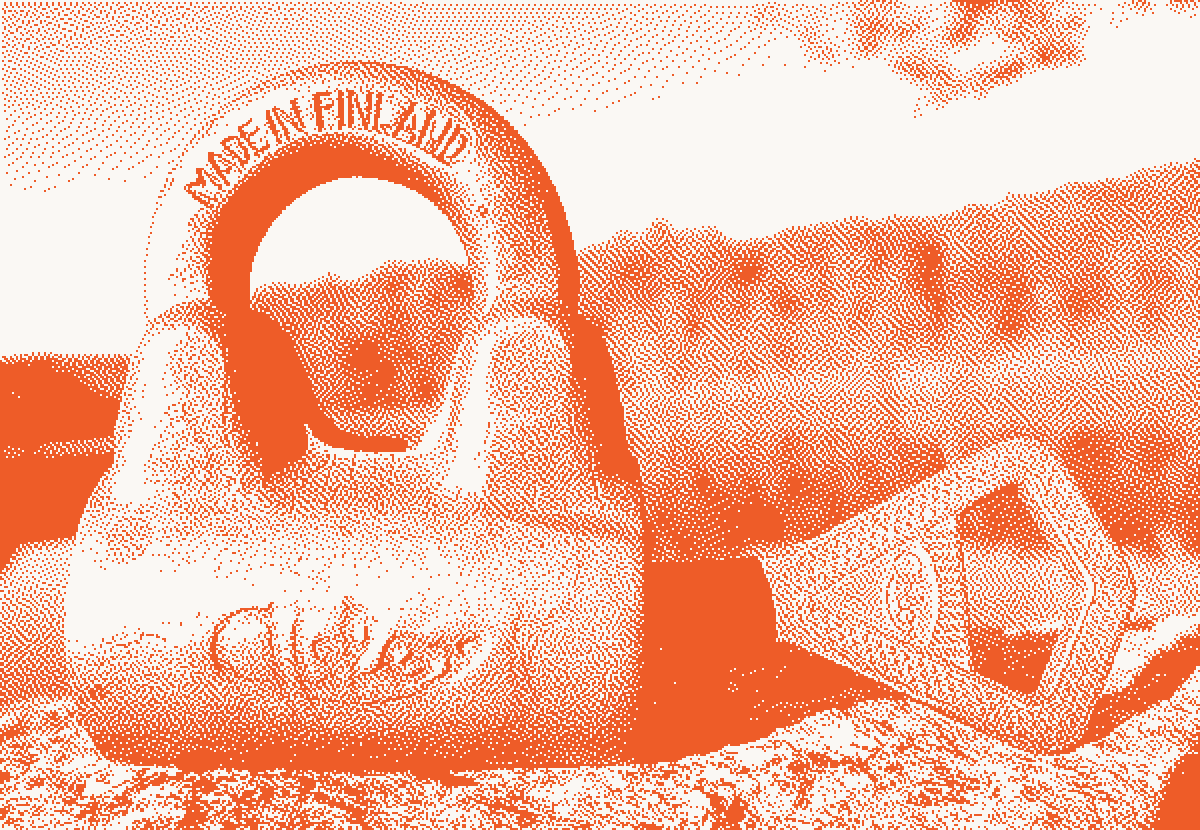
A mid-20th-century padlock, model 3030, made by Abloy in Finland, with its key in the lock. R. Henrik Nilsson, CC BY 4.0.
DeepMind's Lifetime Clause
Google says it has updated non-disparagement terms for new hires. What it has not done is release existing employees from clauses that, according to multiple current and former staff, bar them from criticizing the company for the duration of their lives.
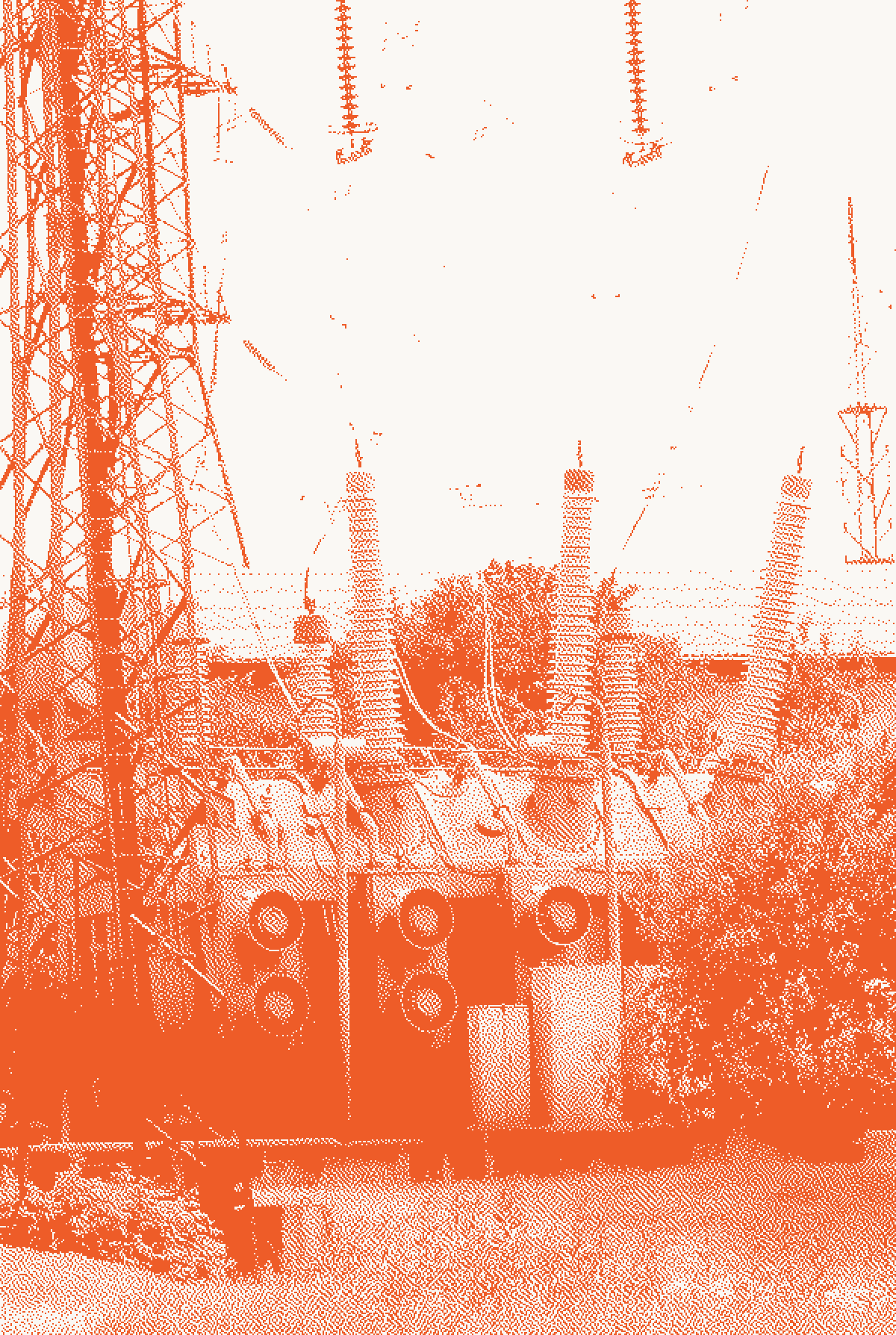
A 330 kV high-voltage transformer. Novoklimov, CC BY 4.0.
The Grid Protectors Program
OpenAI announced the Grid Protectors Program on November 2, framing future compute campuses as national resources for grid reliability. The pilot is a 3.2 GW campus in Effingham County, Georgia, with up to 1,000 MW of flexible demand committed to Georgia Power. When the Georgia grid is under stress, the campus sheds load quickly, helping utilities avoid rolling blackouts.
The frontier has a price tag. This week it got a number.
Monday morning, Anthropic filed an amended S-1/A with the SEC. The document is not a business plan. It is a declaration of intent written in infrastructure spend: nine-month revenue of $33.2 billion, up roughly 1,200% from 2025, compute commitments of $895.4 billion, and a planned Nasdaq listing under the ticker ANT. The frontier AI lab had been private long enough that its financials felt like rumor. Now they are on the SEC website, and what they reveal is a company that has stopped optimizing for private-market optionality and started optimizing for staying at the frontier long enough to matter.
The buried line is the one that sets this S-1 apart from every other tech prospectus on file. Anthropic warns that future models may soon cross the AI R&D threshold in its Responsible Scaling Policy, and that it may not recognize a crossing until after it happens. That is not boilerplate. That is the actual situation, written under penalty of securities law. By Wednesday, Anthropic had moved to a different kind of compliance: invisible text watermarks, embedded at the token-sampling level, rolled to Mythos 5, Opus 4.7, and Sonnet 4.6, with three more models due November 16.
The nightly routine did not produce pages for Thursday, November 5 or Friday, November 6, so this weekly covers three of a possible five days. The thread was clear enough in what arrived: a week that defined compliance as competition, and honesty as a material risk disclosure.
The Lead Story 01
Report by Eddie Belaval
The $895 Billion Bet.
The steel frame of the Boston University Center for Computing & Data Sciences under construction, Boston, Massachusetts. Chris Rycroft from Cambridge, Massachusetts, United States, CC BY 2.0.
An amended S-1 put Anthropic's finances on the SEC website for the first time. The revenue number is large. The commitment number is a different animal entirely.
Source: SEC Form S-1/A, Anthropic PBC, filed 2026-11-02 | · Ticker: ANT (Nasdaq Global Select Market) | · 9-month revenue: $33.2B
By the Numbers: $33.2B nine-month revenue; 1,200% year-over-year growth; $895.4B compute commitments; ~$17B Q3 revenue; ~46% Q2 to Q3 growth; Nasdaq ticker: ANT; RSP threshold crossed: None (as of filing).
The figure that stops you is not the revenue. $33.2 billion across the first nine months of 2026 is a staggering growth rate, up 1,200% from the same period in 2025, but revenue velocity at this stage is expected to look like that. You look at the growth number, you nod, and you move on. What stops you is the $895.4 billion in compute purchase commitments and lease obligations.
$895 billion. Nearly a trillion dollars, pre-committed to computing infrastructure. For comparison, that is more than the combined GDP of Poland and Belgium. Anthropic is not buying chips for next quarter. It is buying the right to remain on the frontier for the better part of a decade, against OpenAI, Google DeepMind, and Meta AI, all of whom are committing comparable sums to the same build.
The mechanism is not complicated. AI capability scales with compute. Compute requires physical infrastructure: data centers, power agreements, cooling systems, networking fabric. None of that scales with software headcount. The commitment number is not a liability in the traditional sense. It is a reservation on the future of the industry, placed before anyone else could place it.
The buried item in the S-1 is the one that has no precedent in American corporate finance. The filing warns that future models may soon reach the threshold in Anthropic's Responsible Scaling Policy at which AI-accelerated research would trigger a mandatory safety pause. The company says no current model has crossed it. It also says it may not recognize a crossing until after it has happened. This is safety as a material risk, the obligation Anthropic imposed on itself that may cost it revenue. No other tech company has written that into a public regulatory filing. That honesty is either the most important disclosure in the document or the most expensive one. Possibly both.
The operating income picture is worth noting: Q2 delivered $974 million in operating income; Q3 swung to a $567 million operating loss, as compute costs outran revenue growth. The direction of travel is real. The question the S-1 poses, without answering, is whether the $895 billion buy-in is large enough to force a consolidation before Anthropic needs to raise again.
✦ ✦ ✦
Shipped. · Also shipped
Also shipped
The Watermark You Can't Turn Off.
Invisible signals in the tokens, four days before xAI does the same, and an indefinite margin ahead of OpenAI. The EU AI Act compliance race just got a leaderboard.
Lab: Anthropic | · Area: API | · Date: 2026-11-03
By the Numbers: 3 models added Nov 3; 6 models total by Nov 16; 0 opt-out options; 4 days ahead of xAI; OpenAI: no timeline announced.
The rollout started November 3. Mythos 5, Opus 4.7, and Sonnet 4.6 now carry Anthropic's invisible text watermark across the Claude API and partner platforms. No beta header required. No opt-out on any plan. The mark is on by default.
The mechanism matters because it is not prompt-level. You cannot wash it out by stripping metadata from your API response or processing the text through a secondary pass. The signal lives in the statistical distribution of the words themselves, embedded at the token-sampling level in ways users cannot see and most callers will not know to check for. The only published detection route is a private-preview API that Anthropic is offering to approved organizations. No public checker exists.
A second wave lands November 16, adding Opus 4.5, Sonnet 4.5, and Haiku 4.5. After that date, every currently available Claude model carries the mark.
Two things about the rollout are worth naming. First, Anthropic moved without requesting input from the developers it affects. API customers received an email notice. They did not receive a vote. The EU AI Act requires synthetic-content disclosure, so compliance is not optional, but the specific implementation choices here, invisible-by-default, detection behind a private preview API, no opt-out on any plan, are choices Anthropic made, not mandates the law prescribed.
Second, the watermark has a loophole on one of the three models. On Sonnet 4.6 specifically, changing temperature, top_p, or top_k from default settings can disable the mark. This is a known sampling characteristic. Anthropic has not patched it. The implication: any sophisticated actor who wanted to strip the watermark from Sonnet 4.6 could do so with a single API parameter change. Mythos 5 and Opus 4.7 do not share this restriction, suggesting the technique differs on the newer architecture.
The competitive read is unambiguous. xAI announced its own watermark for November 7. OpenAI has said nothing. Google DeepMind's approach remains unstated. Anthropic is first, by four days on xAI and by an indefinite margin on the others. That is not a coincidence. It is a positioning decision. Being the lab that ships compliance infrastructure before the regulators arrive is a different competitive move than being the lab that ships the best model. This week, Anthropic ran both races at once.
A mid-20th-century padlock, model 3030, made by Abloy in Finland, with its key in the lock. R. Henrik Nilsson, CC BY 4.0.
DeepMind's Lifetime Clause.
Google says it has updated non-disparagement terms for new hires. What it has not done is release existing employees from clauses that, according to multiple current and former staff, bar them from criticizing the company for the duration of their lives. The staff push came to light November 3 and is now one of the more uncomfortable personnel stories in frontier AI: a company built on the premise of beneficial research employing researchers under lifetime silence agreements. Google has not disputed the existence of the clauses for existing employees.
Source: staff accounts, Nov 3, 2026
A 330 kV high-voltage transformer. Novoklimov, CC BY 4.0.
The Grid Protectors Program.
OpenAI announced the Grid Protectors Program on November 2, framing future compute campuses as national resources for grid reliability. The pilot is a 3.2 GW campus in Effingham County, Georgia, with up to 1,000 MW of flexible demand committed to Georgia Power. When the Georgia grid is under stress, the campus sheds load quickly, helping utilities avoid rolling blackouts. The program is voluntary, the commitment is non-binding, and the communications timing is deliberate: OpenAI's post-election Washington push began this week.
Source: OpenAI announcement, 2026-11-02
Message Threads Public Beta.
Anthropic put server-side message threads into public beta on November 2. Instead of re-sending full conversation history on every API call, callers create a thread on the first request and pass only new messages on subsequent turns. The server holds conversation state between requests. The practical effect: lower token costs on long conversations, and stateful agentic workflows without client-side state management. No special access required, available on all current models.
Source: Anthropic API changelog, 2026-11-02
Dots Goes Enterprise.
OpenAI made its always-on agent generally available to Enterprise, Edu, and Healthcare customers on November 4. Admin preview runs through November 18; on that date, Dots becomes available by default for all eligible workspaces unless admins opt out before then. Dots maintains its own cloud computer and persistent memory across sessions, and runs tasks in the background while users work elsewhere. The enterprise rollout is the most significant Dots deployment to date.
Source: OpenAI announcement, 2026-11-04
Two Releases in One Day.
Anthropic shipped Claude Code v2.1.317 on November 3 and v2.1.318 on November 4. Two point releases in 24 hours is unusual for the team and suggests either a hot-patch scenario or a staged rollout where the second build resolved something the first introduced. Combined, the patch was described as substantive. No detailed release notes were published, which is consistent with how Claude Code typically handles rapid patch cycles.
Source: Anthropic Claude Code changelog, 2026-11-03 and 2026-11-04
Grok Bot Hits the Wall.
Elon Musk confirmed on November 1 that Grok Bot usage limits were silently tightened because serving costs were unsustainably high relative to revenue. Users had been reporting usage meters jumping to 100 percent, sometimes without running a single query, on subscriptions ranging from $30 to $200 per month. Musk's confirmation is notable: it is the first explicit public acknowledgment from a frontier lab that a consumer AI product's unit economics are broken. It will not be the last.
Source: Musk reply on X, 2026-11-01
p.20 · Notes
Quiet on the wire.
Quiet on the Wire
TestingCatalog reported a reference to Claude Mythos 5.5 appearing on Anthropic's Mythos page during this window, suggesting a release could land as early as the following week. Timing and access are unconfirmed.
Several release-cadence trackers flagged November 5 as a likely Meta AI drop date. No confirmation arrived in the three days this weekly covers. Anthropic's Opus 4.8 fast mode deprecation, announced October 30, is set for removal on November 30, with Opus 5.5 fast mode as the stated replacement at $8/$40 per million tokens.
John Jumper, the AlphaFold Nobel laureate who joined Anthropic in June, had not disclosed his role at the company as of this writing. The AlphaFold team restructuring at Google DeepMind continues: DeepMind reportedly disbanded the Nobel-winning group and is concentrating talent on Gemini-integrated scientific systems.
Anthropic's IPO roadshow is expected to follow the S-1/A filing. No date has been published. Nasdaq symbol ANT is reserved.
The Close
Anthropic's amended filing says: "We may not always know when we've crossed a threshold until after we've crossed it."
That is not a boilerplate disclaimer. That is the actual situation, written into a public document, under penalty of securities law.
By Wednesday the same company was embedding invisible signals in its tokens ahead of a regulatory deadline no one had yet enforced.
The frontier built a compliance machine and called it safety. It is both. That tension is now on the SEC website.
✦
Stay on the frontier
Get Shipped. in your inbox.
Daily digest at 9 PM ET. Weekly magazine every Friday morning. Six labs, one feed. No spam, one-click unsubscribe.
New every Friday
Back of Book · p.21 →
The Release Log
A 1:1 mirror of every Anthropic release in the window. Use it as reference. Share it with your team.
A
News
7 Models in window
IPO filings, funding, partnerships, policy, and org moves from across the frontier this week.
Updated IPO prospectus includes Q3 financials, $895.4B in compute commitments, and an RSP threshold disclosure with no precedent in tech. Source: SEC EDGAR, Form S-1/A, Anthropic PBC
Planned 3.2 GW campus in Effingham County, Georgia will offer up to 1 GW of flexible demand to Georgia Power for grid emergency response. Voluntary, non-binding, coordinated with post-election Washington push. Source: OpenAI announcement, 2026-11-02
Multiple current and former employees report clauses barring criticism of the company for life. Google says new-hire terms have been updated; existing employees have not been released. Source: staff accounts, Nov 3, 2026
Meters jumping to 100% on subscriptions from $30 to $200 per month, sometimes with no queries run. Musk confirmed the economics are broken in a reply on X, November 1. Source: Musk on X, 2026-11-01
B
API
3 Release notes
Platform and API changes: watermarking, message threads, and model deprecations.
Token-level invisible watermark, default on, no opt-out. Second wave adds Opus 4.5, Sonnet 4.5, Haiku 4.5 on November 16. Loophole: temperature or sampling parameter changes can disable the mark on Sonnet 4.6 specifically. Source: Anthropic API changelog, 2026-11-03
Server-side conversation state. Create a thread on the first request, pass only new messages on subsequent turns. Available on all current models, no special access required. Source: Anthropic API changelog, 2026-11-02