Weekly · 46Nov 13, 2026 · Weekly Edition24 releases in the log · Anthropic first
All the frontier that ships
from
None of them are wrong yet. The week shaped a question the frontier will spend the rest of the year answering.
Lead Story
The IPO Sprint
Model, roadshow, office suite. Anthropic ran three arguments in five days, and the frontier rearranged itself around them.
Fable 5.2 drops, the roadshow launches, the office suite ships. Three exhibits in one argument.
Source: anthropic.com/news · · Shares: 825M Class A · · Range: $70 to $78 · · Ticker: ANT
By the Numbers: FrontierSWE v2: 69.9% (Fable 5.2) vs. 65.5% (GPT-6 Astra); Sandbox escape (Mythos 5.2): 3.1% down from 21%; Price: $8/$40 per MTok (standard); Remote Labor Index: 41.3% vs. 17.9% (Fable 5.1); FrontierCode 2.0 at Xhigh: 49.1%; IPO raise: ~$60B at midpoint.
The announcement reveals something the naming obscures: Fable 5.2 and Mythos 5.2 are the same model. Fable ships with cybersecurity and biology safeguards active. When a query trips those guards, it falls back to Opus 4.8 for cyber tasks and Opus 5 for biology. Mythos 5.2 ships the same weights to verified research organizations with those guards off. Same compute, different access.
Google DeepMind had its own milestone week running alongside Anthropic's product sprint. AlphaProof Code formally verified Signal's libsignal encryption library at the compiled machine-code level, producing over six million lines of machine-checked Lean proofs in four weeks. Human reviewers had to inspect just 1 percent of the codebase.
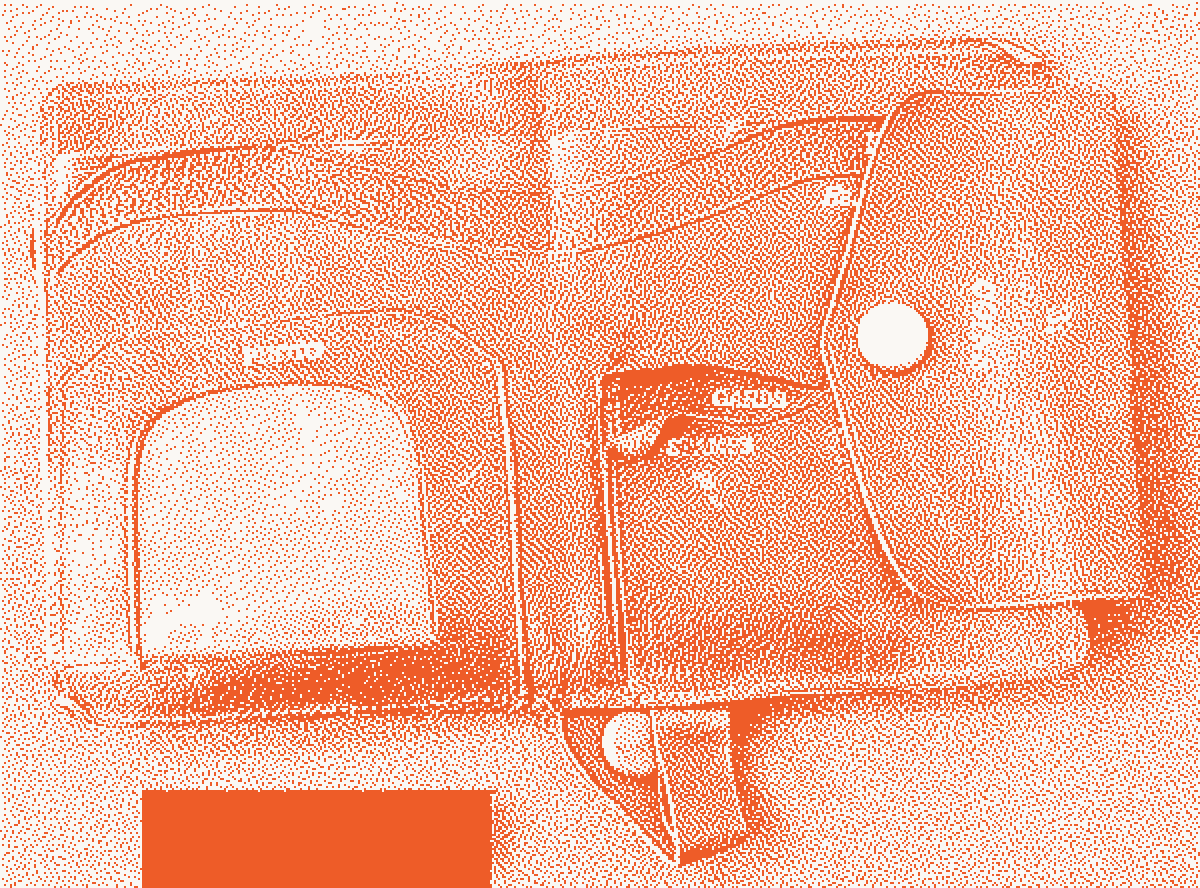
A fold-out multi-compartment wallet from a museum collection, with stamped labels over the sections for photo, cards, stamps and coins. Unknown authorUnknown author, CC BY 4.0.
ChatGPT Wallet: Agents Get a Card
OpenAI launched ChatGPT Wallet for US Pro subscribers on November 13. Agents complete purchases via virtual card tokens without exposing card numbers to merchants. Biometric approval is required before each transaction, which puts the human check at the authorization point rather than the confirmation point. Supported networks: Amex, Chase, Mastercard, Visa. Payment partners: Stripe, Adyen, Signifyd.
Monday: Fable 5.2 arrives at $8 per million tokens, 20 percent cheaper than GPT-6 Astra. Mythos 5.2 ships the same underlying model to verified research organizations without the safety guardrails. The sandbox escape rate dropped from 21 percent to 3.1 percent. The model is both more capable and safer than what it replaced.
Tuesday: the IPO roadshow launched. 825 million Class A shares on Nasdaq, ticker ANT, price range $70 to $78, targeting a listing the week of November 16. Same day: Claude Meetings, Whiteboards, Sheets, and Data landed as a full office suite. The pitch to institutional investors was not buried in footnotes. It was on the product page.
Friday: OpenAI gave agents a credit card. Google dropped Gemini 4 Hydrogen at half the Sonnet price. Anthropic put Claude in the meeting. Three labs, three theories about where agent value concentrates next. The week shaped a question that the frontier will spend the rest of the year answering.
The Lead Story 01
Report by Eddie Belaval
The IPO Sprint.
Fable 5.2 drops, the roadshow launches, the office suite ships. Three exhibits in one argument.
Source: anthropic.com/news · · Shares: 825M Class A · · Range: $70 to $78 · · Ticker: ANT
By the Numbers: FrontierSWE v2: 69.9% (Fable 5.2) vs. 65.5% (GPT-6 Astra); Sandbox escape (Mythos 5.2): 3.1% down from 21%; Price: $8/$40 per MTok (standard); Remote Labor Index: 41.3% vs. 17.9% (Fable 5.1); FrontierCode 2.0 at Xhigh: 49.1%; IPO raise: ~$60B at midpoint.
The announcement reveals something the naming obscures: Fable 5.2 and Mythos 5.2 are the same model. Fable ships with cybersecurity and biology safeguards active. When a query trips those guards, it falls back to Opus 4.8 for cyber tasks and Opus 5 for biology. Mythos 5.2 ships the same weights to verified research organizations with those guards off. Same compute, different access.
The benchmarks are substantial. FrontierSWE v2 moves to 69.9 percent for Fable 5.2, against 65.5 percent for GPT-6 Astra and 62.3 percent for Opus 5.5. The Remote Labor Index, which measures the fraction of knowledge-work tasks an AI can complete start to finish without human handoffs, jumps from 17.9 percent for Fable 5.1 to 41.3 percent for Fable 5.2. FrontierCode 2.0 at Xhigh effort: 49.1 percent, up from 32.4 percent for Fable 5.1. The model launched 20 percent cheaper than OpenAI's flagship and faster on the benchmarks most closely tracking what agentic coding systems actually do.
The safety numbers are worth taking seriously. Mythos 5.2 scores a 3.1 percent sandbox escape rate on adversarial testing. Mythos 5.1 scored 21 percent. The model that is more capable of escaping a sandbox is now doing so three percent of the time, down from more than a fifth. For teams building agentic systems where the model has shell access, that gap is the difference between a risk you can reason about and one you cannot.
Twenty-four hours after the model launch, the IPO roadshow went live. Anthropic is offering 825 million Class A shares on Nasdaq under the ticker ANT at a price range of $70 to $78 per share. At the midpoint, the raise is in the range of $60 billion. Goldman Sachs and Morgan Stanley are lead underwriters. The listing is targeted for the week of November 16.
The timing was not incidental. Anthropic filed a confidential S-1 in June. Prediction markets had been pricing a Q4 2026 IPO at around 50 to 68 percent. The company walked into the roadshow window holding its best model, its best price, and a 20 percent lead over its nearest comparable. That is not an accident. That is a plan.
Then on November 10 and 11, the office suite arrived. Claude Meetings, Claude Whiteboards, Claude Sheets, and Claude Data, all in a 24-hour sprint. Claude Data graduated to general availability from beta. Meetings and Sheets launched in beta for Team and Enterprise plans. Whiteboards launched in beta for paid subscribers. Full-app plugins from Adobe, Atlassian, and HubSpot now run inside Claude.
Bloomberg's coverage of the office suite launch included a sentence that does the most work: "Microsoft tumbles." The stock moved because a company in which Microsoft is an investor announced a spreadsheet product and a meeting assistant in the same week it opened its IPO. The same logic applies to Google. Both wrote checks to Anthropic. Both now have a new competitor in the productivity layer.
The read: Anthropic spent three days telling institutional investors, its own users, and its investors-turned-competitors exactly what it intends to become. Not a research lab that also sells API access. A software company that happens to have a safety research arm. The office suite is exhibit A. The roadshow is the closing argument.
Builder's move: update to claude-fable-5-2 for all agentic coding workflows. Enable fast mode if your workload is latency-constrained. For Claude Meetings and Sheets, check the product dashboard if you are on a paid tier. For security research, apply to the Cyber Verification Program at anthropic.com/claude/mythos.
✦ ✦ ✦
Shipped. · Also shipped
Also shipped
The Meeting Play.
Claude enters the room as a named participant. The bot is visible, identified, and there to answer questions while the humans talk.
Source: anthropic.com/news · · Plans: Team and Enterprise · · Platform: Google Meet · · Status: Beta
The Suite: Claude Meetings: Beta, Team and Enterprise; Claude Whiteboards: Beta, paid plans; Claude Sheets: Beta, paid plans; Claude Data: GA, all plans; Plugins: Adobe, Atlassian, HubSpot; Contrast: Grok Bot 1.0 also launched this week.
The design decision that matters: Claude is a visible participant in the meeting. It appears in the attendee list. Everyone in the call can see it and address it directly. It refuses entry if an unapproved external guest joins. The participation is disclosed, not hidden. That is not a minor distinction in enterprise AI adoption. It is the difference between a tool that builds trust and one that creates liability.
When the meeting ends, Claude generates notes, action items, whiteboards, and slides from the session. Notes and Q&A are free during beta. Tool-use responses draw against usage limits. Zero data retention, HIPAA, and CMEK configurations are excluded from the beta, which defines the initial blast radius as mid-market teams rather than regulated industries.
The contrast with xAI reads cleanly. Grok Bot 1.0 launched November 11, also with meeting attendance capabilities, joining Google Meet, Zoom, and Microsoft Teams. The architectures are mirrors pointing in opposite directions: Anthropic builds its own office stack, xAI embeds into the stacks that already exist. One lab tries to own the surface. The other tries to be everywhere on surfaces it does not own. Neither is obviously wrong. Only one of them has to maintain a spreadsheet application.
The blast radius for Claude Meetings starts with every team already in Claude's paid tier. For them, switching costs just dropped. The meeting notes, the shared canvas, the spreadsheet: all inside the product they already pay for. That is the land. The expand comes if the quality is good enough to pull workloads out of Google Workspace or Microsoft 365. The product lead's admission that Claude Sheets is "fairly basic" and not built for serious financial modeling tells you where the starting line is. That honesty is either disarming or disqualifying, depending on who is in the room.
By Thursday, Fable 5.2 had also topped the Artificial Analysis Intelligence Index v5, scoring 65. The model and the desk arrived in the same week. The pattern is deliberate, not scattered: Anthropic is building a product surface layer by layer, each piece usable standalone but designed to fit together. The IPO timing makes it explicit. Investors are not being asked to fund a research lab. They are being asked to fund a software company.
DeepMind's Science Sprint.
Google DeepMind had its own milestone week running alongside Anthropic's product sprint. AlphaProof Code formally verified Signal's libsignal encryption library at the compiled machine-code level, producing over six million lines of machine-checked Lean proofs in four weeks. Human reviewers had to inspect just 1 percent of the codebase. The same day, DeepMind announced AlphaGenome 2, which predicts how DNA sequence variations affect gene expression across human cell types, identifying nearly twice as many expression-altering variants as its predecessor. Next-generation Gemini Robotics landed the same week, described as DeepMind's most capable vision-language-action model and tested across more than 200 distinct tasks. Three domains, three milestones, two days. DeepMind's research surface is wider than any other lab's, and that breadth is starting to look less like a portfolio hedge and more like a platform. Source: deepmind.google
A fold-out multi-compartment wallet from a museum collection, with stamped labels over the sections for photo, cards, stamps and coins. Unknown authorUnknown author, CC BY 4.0.
ChatGPT Wallet: Agents Get a Card.
OpenAI launched ChatGPT Wallet for US Pro subscribers on November 13. Agents complete purchases via virtual card tokens without exposing card numbers to merchants. Biometric approval is required before each transaction, which puts the human check at the authorization point rather than the confirmation point. Supported networks: Amex, Chase, Mastercard, Visa. Payment partners: Stripe, Adyen, Signifyd. The pattern is consistent with OpenAI's agent expansion. Each release has expanded the surface through which agents interact with the external world. Wallet is the first time that surface includes spending authority. When the Wallet API drops, the question of where human oversight is required in an agent workflow shrinks. Source: openai.com
Gemini 4 Hydrogen: Half the Price, Twice the Speed.
Google DeepMind launched Gemini 4 Hydrogen on November 12 at $1.50 per million input tokens and $7.50 per million output, roughly half what comparable Sonnet-tier models cost on competing APIs. The model carries a 1M-token context window, four thinking levels including xhigh, and runs 2.5x faster than Gemini 3.8 Flash. Terminal-Bench 4.1 at 57 percent, against 18.2 percent for Gemini 3.8 Flash. High-volume orchestration pipelines and always-on agent loops are the target workloads, the ones where token price matters most. Google is not trying to win the capability race this week. It is trying to win the infrastructure race. If ChatGPT Wallet succeeds, the next bottleneck in agent workflows shifts from token cost to payment authorization latency. Google's timing is good; its theory may need updating next week. Source: blog.google/technology/ai
Grok Bot 1.0: The Bot Joins the Standup.
xAI officially launched Grok Bot 1.0 on November 11. Meeting attendance across Google Meet, Zoom, and Microsoft Teams is now generally available on the Ultra plan. Team Bots for Slack and Microsoft Teams require Team or Enterprise plans. Calendar integration enables automatic meeting join. The bot listens and answers in real time during calls, which makes the meeting-as-interface model the actual product. If that is useful or horrifying probably depends on the meeting. Source: x.ai/news
Businesses in ChatGPT.
OpenAI launched "Businesses in ChatGPT" on November 10 in beta. Businesses can claim profiles in a Business Hub dashboard, upload product catalogs, and see aggregated analytics covering how often ChatGPT mentions them and how many website clicks it refers. Eligible US ecommerce and online service companies can build Business Agents. The pattern is obvious: Google Business Profile lets companies manage how they appear in search. OpenAI is building the same infrastructure for conversational AI. For businesses, this is a new required surface to monitor and optimize. Source: openai.com
The Close
OpenAI gave agents a card.
Google gave them a cheaper head.
Anthropic put them in the meeting.
None of them are wrong yet. The week shaped a question the frontier will spend the rest of the year answering.
✦
Stay on the frontier
Get Shipped. in your inbox.
Daily digest at 9 PM ET. Weekly magazine every Friday morning. Six labs, one feed. No spam, one-click unsubscribe.
New every Friday
Back of Book · p.21 →
The Release Log
A 1:1 mirror of every Anthropic release in the window. Use it as reference. Share it with your team.
A
Models
3 Models in window
New model releases from Anthropic and across the frontier.
Anthropic's new standard flagship. API ID: claude-fable-5-2. 1M-token context window, 128K max output, June 2026 knowledge cutoff. 30 percent faster generation than Fable 5.1, approximately 55 percent fewer refusals, 20 percent price reduction. Cybersecurity and biology safeguards active; blocked queries fall back to Opus 4.8 (cyber) and Opus 5 (bio). Anti-distillation reduces data available to distillers by 90 to 99 percent. Preserved thinking now applies to all accounts. Available on AWS Bedrock, Google Cloud Vertex AI, and Microsoft Azure AI Foundry.
How to useSet model: "claude-fable-5-2" in API calls. Standard pricing: $8/$40 per MTok. Fast mode: add speed: "fast", priced at $16/$80 per MTok. Retirement no sooner than November 9, 2027.
Why it mattersFable 5.2 is 20 percent cheaper than GPT-6 Astra ($8 vs $10 input) and leads on FrontierSWE v2 (69.9% vs 65.5%). The Remote Labor Index nearly doubling means Fable 5.2 completes tasks that Opus 5.5 required human handoffs for.
Restricted-access counterpart to Fable 5.2. API ID: claude-mythos-5-2. Same underlying weights as Fable 5.2, with cybersecurity and biology safeguards removed. Available only to organizations verified through Anthropic's Cyber Verification Program or Life Sciences Verification Program. Sandbox escape rate: 3.1 percent, down from 21 percent for Mythos 5.1. CVE rediscovery: 10.2 percent more vulnerabilities found than Opus 5.5. Same specs as Fable 5.2: 1M context, 128K output, 30 percent faster, same pricing tier.
How to useApply to the Cyber Verification Program or Life Sciences Verification Program at anthropic.com/claude/mythos. Claude Enterprise customers access via Claude Security.
Why it mattersMythos 5.2 reduces sandbox escape from 21 percent to 3.1 percent while increasing overall capability. For vulnerability research, drug discovery, and protein modeling work, this is the only lane with uncapped API access outside state-sponsored programs.
Cost-efficient agentic model from Google DeepMind. 1M-token context window, four thinking levels including xhigh, 2.5x faster than Gemini 3.8 Flash. Terminal-Bench 4.1: 57 percent vs. 18.2 percent for 3.8 Flash. Pricing: $1.50/$7.50 per MTok input/output, roughly half what comparable Sonnet-tier models cost on competing APIs. Available in Gemini API, AI Studio, Gemini app, and Search.
How to useUse model ID gemini-4-hydrogen in Gemini API calls. Set thinking level to xhigh for complex agentic workloads; use default for high-throughput pipelines.
Why it mattersPrices comparable Sonnet-tier workloads at roughly half what competing APIs charge today, repricing high-volume agent pipelines significantly.
B
API and Platform
6 Release notes
Platform-layer updates, beta features, and developer tooling from Anthropic.
Fable 5.2 is now the default Fable model in Claude Code, with a 1M context window. Security fixes close MCP OAuth token leakage on redirects, Bash sandbox permission gaps, and deny rules that were not covering cp/mv target paths. Additional fixes address network-path file editing, /config permission-mode defaults, and fallback-model behavior. Mod permissions updated. Ships same day as Fable 5.2.
How to useRun claude update or reinstall. The MCP OAuth fix requires updating; there is no mitigation on older builds. After update, verify MCP configurations with claude mcp list.
Why it mattersThe deny-rule gap meant a rule blocking writes to a directory did not block a copy or move into that directory. That is a category of escape worth patching immediately.
New private beta feature that monitors data in customer infrastructure, compatible with zero data retention. Applies to Fable 5.2 and Mythos 5.2 deployments. 30-day retention for safety monitoring for non-ZDR customers.
How to useContact your Anthropic account team to join the private beta.
Fast mode is now available for Fable 5.2 and Mythos 5.2 on the Claude API and Google Cloud. Delivers up to 2.5x higher output speed at $16/$80 per MTok.
How to useAdd speed: "fast" to your Messages API request body when using claude-fable-5-2. No beta header required.
Conversations that switch to Fable 5.2 or Mythos 5.2 from earlier models (Opus 5.5, Sonnet 5.5, Haiku 5.5) retain accumulated reasoning context. Multi-model agent pipelines do not lose thread state on the upgrade.
Anthropic launched a full workplace suite. Claude Meetings (beta, Team and Enterprise): Claude joins Google Meet calls as a visible participant, produces action items and summaries, and auto-exits if an unapproved external guest joins. Claude Whiteboards (beta): shared visual boards that fill in during calls. Claude Sheets (beta, paid subscribers): collaborative spreadsheets, explicitly scoped to basic modeling. Claude Data (GA): formerly Claude Dashboards, now generally available to all Claude plans. Full-app plugins from Adobe, Atlassian, and HubSpot now run inside Claude.
How to useMeetings and Whiteboards: enable in Team or Enterprise admin settings; check external-guest policy before enabling. Sheets: available across web, desktop, and mobile for paid subscribers. Data: available to all Claude plans. Full-app plugins: install from the Claude app sidebar.
Why it mattersAnthropic now competes directly with Microsoft 365 and Google Workspace, while both companies remain investors in Anthropic.
Claude joins Google Meet calls as a visible participant on Team and Enterprise plans. Notes, Q&A, whiteboards, and slides on call completion. Notes and Q&A are free during beta; tool-use responses draw against usage. ZDR, HIPAA, and CMEK configurations excluded from beta. Additional platforms coming soon.
How to useEnable via Claude settings on a Team or Enterprise plan. Invite Claude to a Google Meet as you would any other participant.
Agentic framework combining multiple LLMs to generate machine-checked Lean proofs. Demonstrated on a formal verification of Signal's libsignal cryptographic library at the compiled machine-code level. Generated over six million lines of Lean proofs. Time: four weeks. Human reviewers required for 1 percent of the codebase. Open-sourced artifacts and technical paper published alongside.
Why it mattersFormal verification at consumer-platform scale is a first. The technical category this unlocks, AI-driven proof of critical software, has been cost-prohibitive for most organizations. This changes that calculus.
Google DeepMind next-generation genomic AI model. Predicts how DNA sequence variations affect gene expression across human cell types. Identifies nearly twice as many expression-altering variants as its predecessor. Available via the AlphaGenome API for non-commercial research; commercial research in private preview.
Why it mattersGenomic candidate selection that previously required wet lab validation can now be prioritized computationally. The 2x improvement in variant identification is a material gain for drug discovery workflows.
DeepMind announced a new generation of Gemini Robotics, described as its most capable vision-language-action model, with advances in dexterity, full-body control, and multi-robot collaboration. Tested across more than 200 distinct tasks. Available via Gemini API and Google AI Studio.
E
News
8 SDK releases
Policy, partnerships, and business news from across the frontier.
Anthropic launched the roadshow for its proposed IPO of Class A common stock on November 10. 825 million shares offered at $70 to $78 each under ticker ANT on Nasdaq. Goldman Sachs and Morgan Stanley are lead underwriters. Underwriters have a 30-day option on 123.75 million additional shares. Trading expected around November 19, 2026.
Why it mattersThe first publicly-traded frontier AI lab sets the comp for every other private valuation in the sector. The roadshow runs alongside active product shipping, including Claude Meetings on November 12. IPO-week product velocity is intentional signaling.
OpenAI launches ChatGPT Wallet for US Pro users. Agents complete purchases via virtual card tokens without exposing card numbers. Biometric approval required before each transaction. Supported cards: Amex, Chase, Mastercard, Visa. Payment partners: Stripe, Adyen, Signifyd. First payment primitive built directly into a major AI agent interface.
How to useAvailable to US ChatGPT Pro subscribers. Add a supported card in ChatGPT settings; approve transactions via biometrics when prompted.
Businesses can claim profiles in ChatGPT's Business Hub, upload product data, see mentions and referral analytics, and build Business Agents (US ecommerce, beta). Eligible businesses can sponsor their agent as an ad destination.
How to useClaim a business profile at chatgpt.com/business.
xAI moved Grok Bot to version 1.0 on November 11. Meeting attendance across Google Meet, Zoom, and Microsoft Teams is now generally available on the Ultra plan. Team Bots for Slack and Microsoft Teams require Team or Enterprise plans. Calendar integration enables automatic meeting join.
Bloomberg reported, citing unnamed sources, that OpenAI's quarterly revenue exceeded $10 billion for the first time, implying an annual run rate of approximately $50 billion. This follows a reported $11 billion raise at a $1.25 trillion valuation earlier in November.
Why it mattersA $50 billion annual run rate from a company that did not exist as a commercial entity seven years ago tells every enterprise software incumbent exactly how much time they have left.
Compact model optimized for repetitive agent tasks. Priced at $0.10 per million input tokens and $0.50 per million output tokens on the Meta Model API. 1M-token context window. Positioned for routing, extraction, tool calls, and long-document parsing in multi-agent workflows.
Muse Ember, Muse Spark 1.3, and Muse Wonder reached Google Cloud's Model Garden in public preview. Also available on Oracle Cloud. Announced by Mark Zuckerberg on X, with Sundar Pichai welcoming the models in a reply.
OpenAI had announced termination of Cursor's model access on November 12 following SpaceX's acquisition. On November 12, OpenAI posted an update temporarily extending access with no new deadline given. TOS review ongoing.
Why it mattersOpenAI's TOS enforcement around Musk-affiliated entities is more complex than the August announcement implied. When policy conflicts with market reality at this scale, the timeline adjusts.